Nuwara Eliya Tea Country: Where Sri Lanka's Famous Tea Begins
By Stay Lanka Travels
Nuwara Eliya sits at nearly 1,900 metres and produces Sri Lanka's most delicate highland teas. A guide to what makes its tea distinct, what to do at a tea estate, and how it compares to Ella for tea experiences.
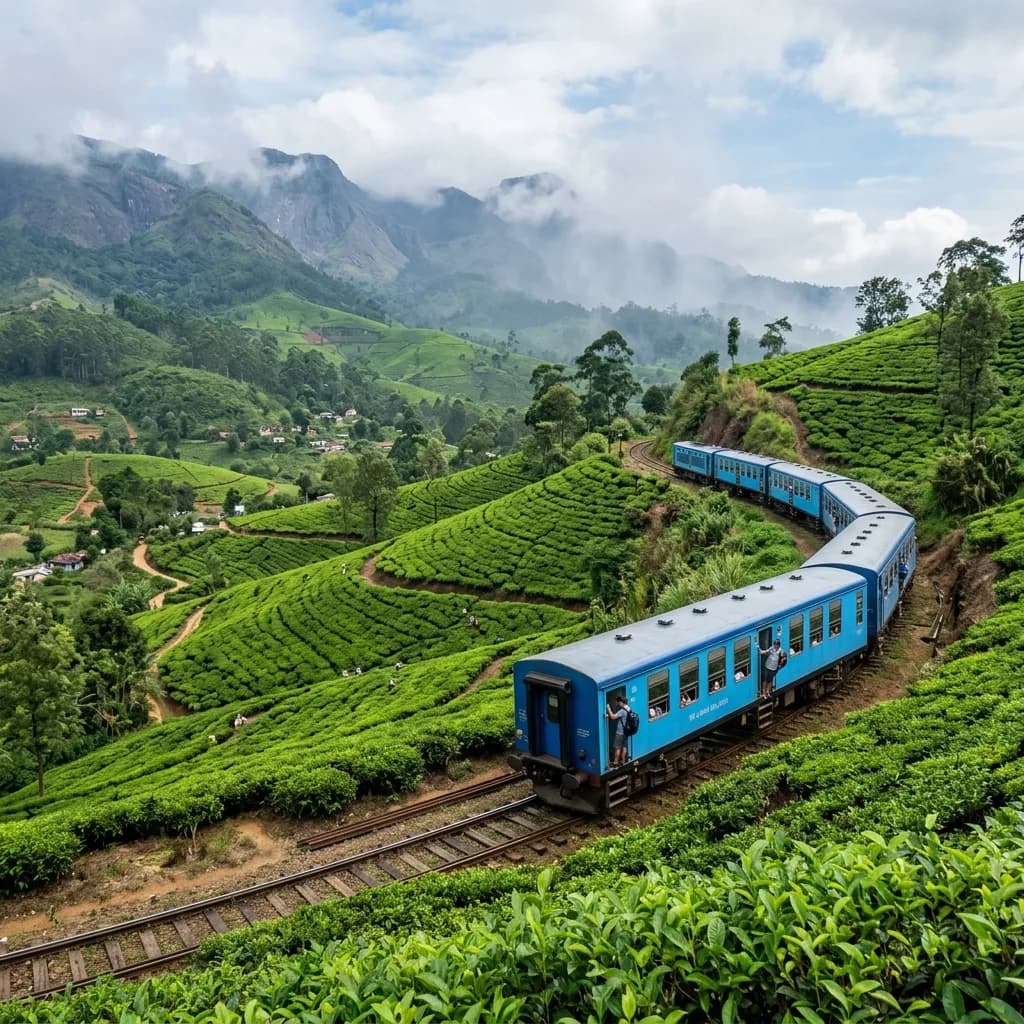
The train from Kandy takes around four hours to reach Nanu Oya, the station below Nuwara Eliya. At some point in the last hour of that journey , somewhere above Ramboda, where the track curves around a valley and the tea bushes begin covering everything , the air through the open window changes. It goes cooler and sharper. The humidity of the lowlands disappears. You notice it before you think about noticing it.
That's the first thing Nuwara Eliya tea country tells you. You're somewhere genuinely different from the rest of Sri Lanka.
What Nuwara Eliya Actually Is
Nuwara Eliya sits at 1,868 metres above sea level in Sri Lanka's central highlands, 30 kilometres southeast of Kandy by road and considerably higher. It's been a tea-growing region since the British cleared the original forest for estates in the second half of the 19th century. The town itself , with its red-brick post office, its colonial-era hotels, its cool damp evenings , still carries that history visibly.
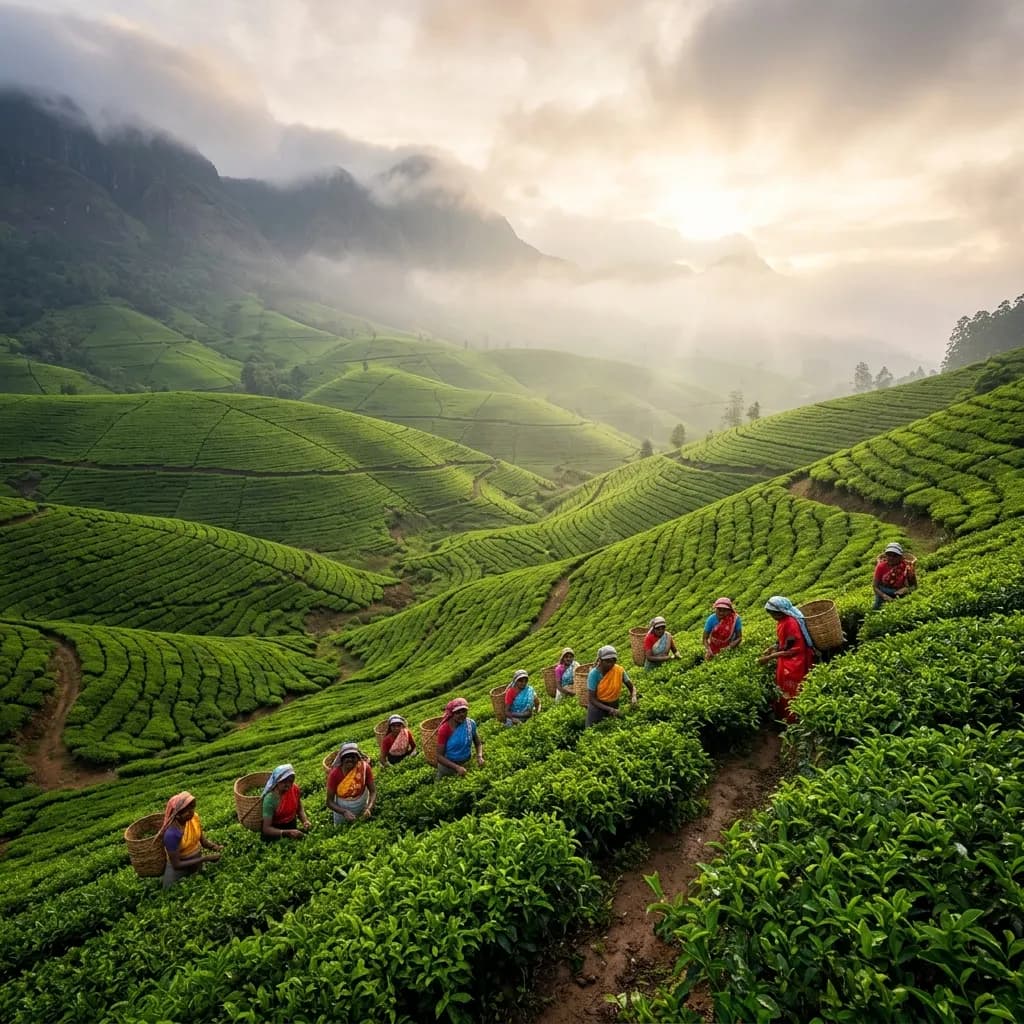
The surrounding landscape is all tea. Not in the way that Ella has tea on the hillsides around a village, but in the way that every hillside, every slope, every angle of the horizon you can see from the road is covered in neat rows of Camellia sinensis. Estates here run into thousands of acres. The workers , mostly Tamil families whose ancestors were brought from South India under British rule , live on the estates in estate housing, and have for generations.
The cool climate is what makes Nuwara Eliya tea distinct. At this altitude, nights regularly drop below 10°C between November and February. The tea bushes grow slowly in the cold. That slow growth concentrates aromatic compounds in the leaves. The result is a pale, golden brew with a brightness and floral delicacy that you don't get from lower-grown Sri Lankan teas. Tea experts call the best Nuwara Eliya teas "high-grown" and treat them as the most refined Ceylon teas produced.
What Ceylon Tea Actually Means
Sri Lanka was the world's dominant coffee producer until the 1870s, when a fungus called coffee leaf rust destroyed the estates within a decade. Tea replaced it fast, and by the 1880s Ceylon , the island's colonial-era name , was producing tea in serious volume.
"Ceylon tea" is now a geographical indicator. It means tea grown in Sri Lanka, under specific conditions, and certified accordingly. But within that label, the differences are significant.
The island produces teas at very different altitudes, and altitude is the biggest determinant of character. Low-grown teas, from the south's coastal plains, are darker, stronger, and better suited to the kind of milk tea that most Sri Lankans drink daily. High-grown teas from Nuwara Eliya are lighter, more aromatic, and closer to the character of a good Darjeeling first flush.
Nuwara Eliya is at the top of that spectrum. The teas from Pedro Estate, Bluefield, and Damro Labookellie , the most accessible estates near town , are sold internationally as premium single-origin products. At the estate cupping rooms, you taste them without milk first. They're sometimes described as having notes of citrus, rose, and something grassy-fresh that disappears the moment you add milk.
What You Actually Do at a Tea Estate
Most visitors to Nuwara Eliya tick "tea factory tour" off a list without really understanding what they've seen. The better approach is slower.
At Pedro Estate, three kilometres east of town, the factory floor operates on vintage machinery , withering troughs, rolling tables, oxidation racks, firing chambers. The guide walks you through each stage: fresh-picked leaves arriving from the field, losing moisture overnight in the withering loft, being twisted in the rollers to break the cell walls and start oxidation, then fired to stop that process and fix the leaf. From field to finished tea takes around 24 hours.
The walk through the plantation itself is more interesting to most visitors than the factory. Tamil tea pluckers work the rows from early morning, removing the terminal bud and two leaves from each shoot , "two leaves and a bud," the phrase you'll hear at every estate. An experienced plucker picks up to 20 kilograms of fresh leaf in a day. Watching the speed and precision of it is genuinely striking.
The cupping session at the end is where the visit becomes useful. You taste the estate's different grades side by side , whole leaf, broken leaf, fannings , and the differences are real and perceptible. Nuwara Eliya teas at this elevation have an astringency that's clean rather than harsh, and a finish that lingers in a way that flat-tasting teas don't.
For a broader look at Sri Lanka tea tours and what to expect across the highland estates, there's more detail in that guide.
Nuwara Eliya vs Ella for Tea Experiences
Both Nuwara Eliya and Ella sit in Sri Lanka's tea country. The tea is real in both places. But the experiences are different enough that they're worth comparing honestly.
Nuwara Eliya is the industrial heart of Ceylon tea. The estates here are large , some spanning thousands of acres , and the production is serious. When you visit a factory at Pedro or Damro Labookellie, you're watching tea being made at commercial scale. The landscape is defined by it. Every hillside, every valley, every road you drive belongs to a named estate.
Ella is smaller, more accessible, and more visitor-oriented. The Uva region tea grown around Ella , particularly from the Halpewatte estate , has its own distinctive character, a wintergreen sharpness that comes from the dry winds that blow through between July and September. The plantation walks around Ella are shorter and closer to the village. The tea experiences feel more integrated into a general visit.
If you're primarily there for the tea , the factory process, the cupping, the landscape at scale , Nuwara Eliya is the more complete experience. If tea is one part of a broader trip through the highlands, the Ella tea experiences work well alongside the hikes and the train journey.
The other practical difference: Nuwara Eliya is cooler, which some people love and some people find unexpectedly cold. Pack a layer you weren't planning to need.
The Tea Country Between Kandy and Nuwara Eliya
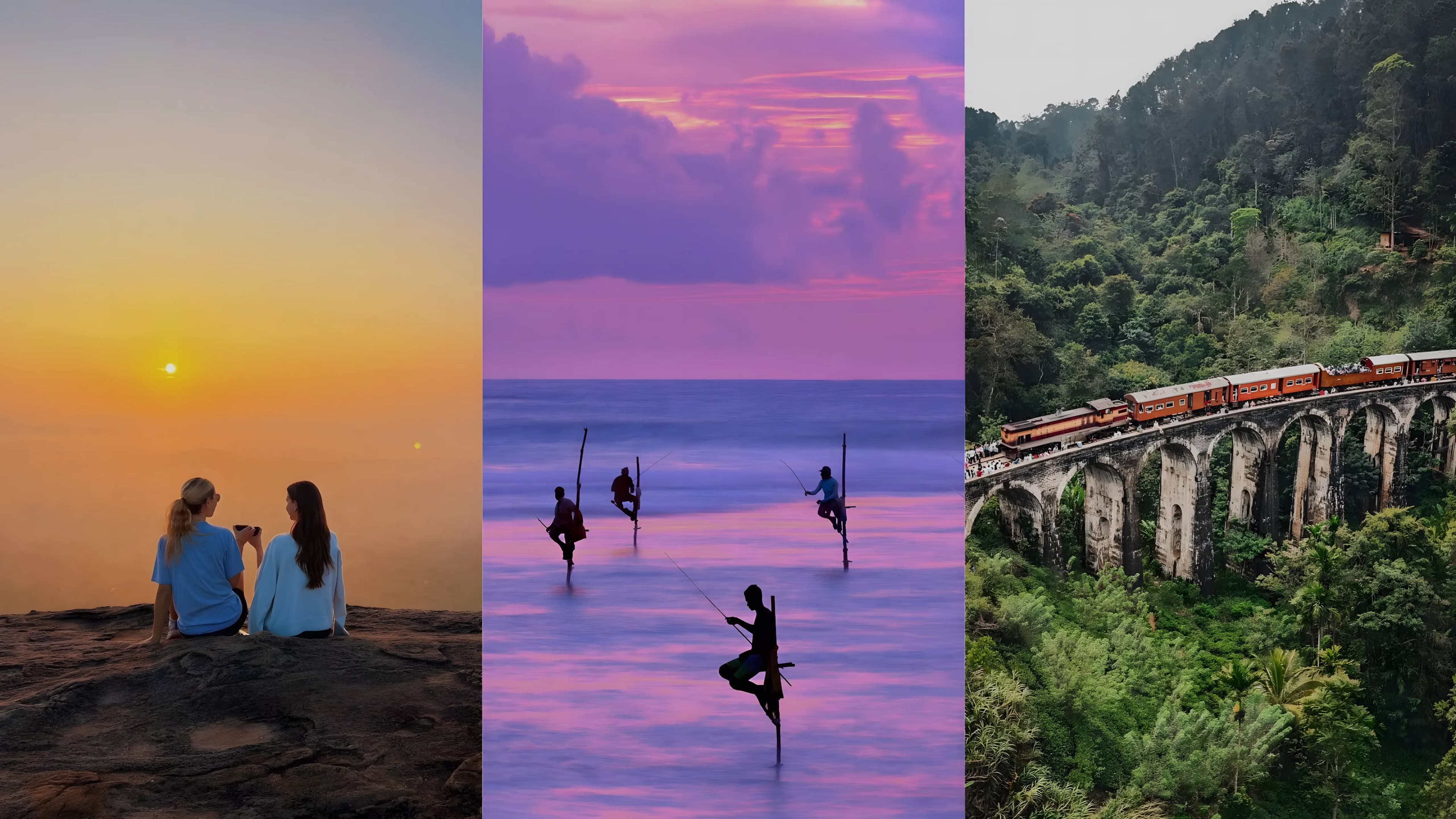
The journey from Kandy to Nuwara Eliya by train passes through some of the most productive tea country in Sri Lanka. The track climbs through Peradeniya, curves through Gampola, then rises steeply through Ramboda toward Hatton and Nanu Oya. For much of this route, the windows on both sides look out onto nothing but tea.
Damro Labookellie is right on the highway between Kandy and Nuwara Eliya, and it's the easiest estate to stop at without planning ahead , they offer free factory walks and complimentary tea on an open veranda above the plantation. It's not the deepest experience, but it's a useful introduction to how an estate works before you reach Nuwara Eliya proper.
Nuwara Eliya's colonial-era hotels , the Grand Hotel in particular, built in 1891 , still serve afternoon tea on the lawn. This is less a tea experience and more a historical curiosity, but it's a specific kind of Sri Lanka moment: sitting in an Edwardian lounge at nearly 2,000 metres, watching mist come in off the hills, with a pot of high-grown Orange Pekoe in front of you.
Questions Travellers Ask About Nuwara Eliya Tea Country
What makes Nuwara Eliya tea different from other Sri Lankan teas? Altitude is the main factor. At nearly 1,900 metres, the tea bushes grow slowly in the cold air. That slow growth concentrates aromatic compounds in the leaves, producing a pale, golden brew with floral brightness and a clean finish. It's Sri Lanka's lightest and most delicate tea, very different from the robust low-grown teas used in everyday milk tea.
How do I visit a tea estate in Nuwara Eliya? Pedro Estate is three kilometres from town and one of the most accessible. Damro Labookellie, on the Kandy highway, offers free entry and complimentary tea. Most estates have a guided factory tour followed by a tasting session. No advance booking is usually needed, but early morning visits let you see pluckers working in the plantation.
Is Nuwara Eliya or Ella better for tea? It depends what you're after. Nuwara Eliya has larger estates, a more industrial-scale production experience, and tea that's considered the finest grown in Sri Lanka. Ella has smaller, more visitor-oriented plantation walks and a tea region , Uva , with its own distinct character. Both are worth visiting if your itinerary allows it.
When is the best time to visit Nuwara Eliya for tea? The estates operate year-round. The Nuwara Eliya season peak , when the tea is considered at its most delicate , runs roughly from January to March. July to September produces the Uva teas around Ella in peak condition. Either window gives you a working estate visit; the question is what else you want from the trip around it.
How cold does Nuwara Eliya get? Daytime temperatures in the highlands sit around 16 to 22°C. Evenings and nights between November and February regularly drop below 10°C. Most visitors are surprised by how cold it gets after dark. Bring a proper layer even if you're arriving from the beach.
Tea Country as Something to Move Through Slowly
Nuwara Eliya tea country is the kind of place that loses its meaning if you move through it fast. A two-hour factory stop on the way to Ella gives you a stamp. A day or two in the highlands , a morning in the plantation, an afternoon at the cupping table, an evening by a fireplace in a cold hotel room , gives you something closer to understanding what this landscape is actually about.
Ceylon tea built the Sri Lankan economy for over a century. That history is still visible in the estates, the workers, the factory machinery, and the cup. Taking time to actually read it is the difference between visiting tea country and just passing through it.
Want to explore more?
Download our comprehensive E-Travel Guidebook for Ella.