Exploring Dambulla Cave Temples: The Complete Field Guide
By Stay Lanka Travels
A comprehensive field guide to exploring Dambulla Cave Temple. Discover all five sacred caverns, ancient murals, climb logistics, and visitor etiquette.
From the highway below, Dambulla presents an abrupt visual contrast. A modern golden Buddha towers thirty metres over a roadside monastery. Behind it, a massive black granite dome rises 160 metres into the dry-zone sky. The real treasure lies high above, hidden beneath an arched granite cliff.
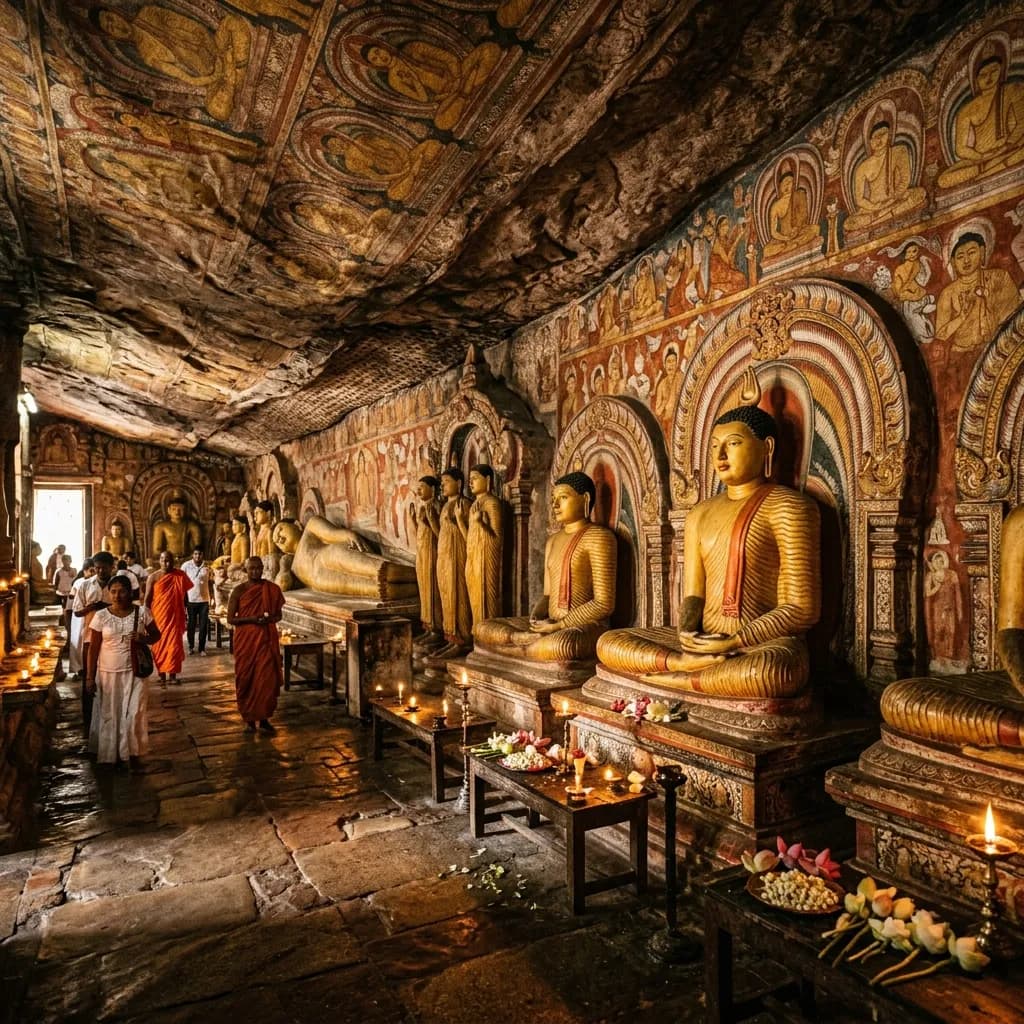
Step across the threshold into the ancient upper caverns. The tropical sun vanishes instantly. Temperatures plummet behind thick stone walls. The scent of frangipani blossoms and coconut oil hangs in the cool air. Around you, more than 150 sculpted Buddhas emerge from the shadows.
Dambulla is not a dead archaeological site. It has functioned as an active Buddhist sanctuary for over twenty-two centuries. Here is your complete field guide to exploring all five caverns, navigating the climb, and absorbing the art.
The Ascent: 364 Steps and the Lower Base
Reaching the ancient shrines requires ascending roughly 364 stone steps. The stairway curves up the southern flank of the granite outcrop. The climb takes fifteen to twenty minutes at a steady pace.
The trail begins shaded by fragrant frangipani trees (araliya). Soon the tree canopy thins, exposing climbers to direct sunlight. Midday temperatures on the exposed rock frequently exceed 34°C. Climb early in the morning or during late afternoon to stay cool.
Along the stairway, troops of grey toque macaque monkeys watch passing visitors. These primates are bold foragers. Keep snacks, plastic bottles, and lotus blossoms zipped inside your daypack. Never attempt to feed or touch the monkeys.
The Critical Ticket Counter Trap
Avoid the most common mistake made by first-time visitors. The ticket office is located at the base of the mountain. You must buy your ticket before starting your climb.
There is no ticket counter at the summit. If you climb without a ticket, guards will turn you away. You must walk all the way back down to buy one. Buy your ticket near the lower museum before heading to the trail.
The Courtyard Threshold and Barefoot Realities
The trail ends at a spacious stone terrace carved into the mountain crest. An arched white colonnade hugs the base of a towering granite overhang. A tranquil lily pond and a revered bodhi tree anchor the courtyard.
Before entering the portico, you must remove your shoes. A staffed footwear counter near the gate stores your shoes for a nominal fee.
By noon, dark granite flagstones absorb punishing heat from the equatorial sun. Walking barefoot across the courtyard can scorch your soles. Pack a pair of thick dark socks in your bag to protect your feet.
Cavern I: Devaraja Lena (Cave of the Divine King)
The first cave sits immediately beyond the entrance gate. Its Sinhala name translates to the "Cave of the Divine King."
Entering through the low doorway feels startlingly intimate. The entire narrow chamber is dominated by a colossal 14-metre reclining Buddha. Ancient craftsmen carved the statue straight from the living bedrock. The figure depicts the Buddha entering Parinirvana at the moment of earthly death.
Lotus blossoms are delicately carved onto the soles of his feet. At the Buddha's feet stands his devoted disciple, Ananda, weeping in grief. Near the entrance stands a shrine to the Hindu god Vishnu. Local tradition claims Vishnu used divine power to help stonecutters carve the cave.
Cavern II: Maharaja Lena (The Cave of the Great Kings)
Step into the second cave, and the scale expands dramatically. Maharaja Lena is Dambulla's crowning architectural masterpiece.
The cavern measures fifty-two metres wide and seven metres tall. Its sheer dimensions evoke an underground cathedral. Fifty-six statues line the cavern walls in standing, seated, and meditating postures.
Two life-sized wooden statues honour monarchs central to Dambulla's history. King Valagamba stands near the western portal. He took refuge here in 103 BCE during an invasion from South India. King Nissankamalla stands near the eastern wall. In the 12th century, he gilded seventy-three statues in radiant gold leaf.
In the cavern centre, sacred water drips steadily from a ceiling crevice. The water flows along the rock contours before dripping into a bronze vessel. Even during harsh droughts, this mysterious spring never ceases flowing. Monks use this sacred water exclusively for daily ritual offerings.
Cavern III: Maha Alut Vihara (The Great New Temple)
A thick masonry partition separates the second and third caves. Maha Alut Vihara was commissioned in the late 18th century by King Kirti Sri Rajasinha. He spearheaded a major revival of Sri Lankan Buddhism and art.
This spacious chamber holds fifty statues of the Buddha. A massive nine-metre reclining Buddha rests along the rear rock wall. Near the entrance stands a painted statue of the king wearing regal Kandyan court robes.
The ceiling artwork represents late Kandyan folk art at its finest. Master painters covered the ceiling in neat horizontal bands. Exactly one thousand identical seated Buddhas meditate against deep red and ochre backdrops.
Cavern IV: Pashchima Vihara (The Western Temple)
For centuries, this compact sanctuary marked the western boundary of the complex. The atmosphere here is quiet and contemplative.
The central figure is a serene seated Buddha in meditation posture (dhyana mudra). An intricate dragon archway (Makara Torana) frames the statue with mythological beasts.
In the middle of the room sits a small stone stupa called the Soma Chetiya. Legend says it entombed the jewellery of King Valagamba's queen, Somawathi. In the 19th century, treasure hunters broke open the stupa looking for gold. A patched masonry scar remains clearly visible on its side today.
Cavern V: Devana Alut Vihara (The Second New Temple)
The final cave is the newest addition to the sacred complex. Monks converted it from a temple storehouse into a working shrine in 1915.
Craftsmen molded its statues from brick and plaster rather than granite bedrock. Eleven statues inhabit this bright chamber, including another reclining Buddha.
Cave V also features statues of Hindu deities like Kataragama (Murugan) and Vishnu. These figures reflect centuries of harmonious religious syncretism in Sri Lanka. Devotees regularly pay respect to Hindu guardian gods alongside Buddhist devotions.
The Fresco Craft: Pigments and Plaster
Dambulla houses over 2,100 square metres of painted murals.
Ancient painters applied natural tempera pigments to a dry preparation layer. Workers first smoothed the uneven rock with clay, sand, straw, and cow dung. They finished the surface with a thin coat of burnt lime plaster.
Artisans extracted all pigments from natural local sources:
- Red and yellow ochre: Ground from iron-rich clays.
- Lampblack: Collected from charred coconut shells and lamp soot.
- White: Produced from kaolin clay and crushed river shells.
- Yellow: Tapped from the sap of forest trees.
Shielded from rain and direct sunlight, these organic pigments have retained their brilliant colours for centuries.
Essential Temple Etiquette and Planning
Dambulla is a revered place of daily pilgrimage. You must observe standard temple etiquette throughout your visit:
- Modest Attire: Cover your shoulders and knees completely. Loose linen trousers, long skirts, or light cotton wraps work best in the heat.
- Headwear and Eyewear: Remove hats, caps, and sunglasses before stepping onto the temple courtyard.
- Photography Rules: Flash photography is strictly banned inside the caves. Flash destroys delicate tempera pigments over time. Never pose with your back turned toward any Buddha statue. Never take selfies with statues.
- Best Visiting Hours: Arrive between 7:30 AM and 9:00 AM to beat midday heat and avoid tour buses. Late afternoon between 4:00 PM and 5:30 PM offers golden light and cool breezes.
Combining Dambulla with Sigiriya
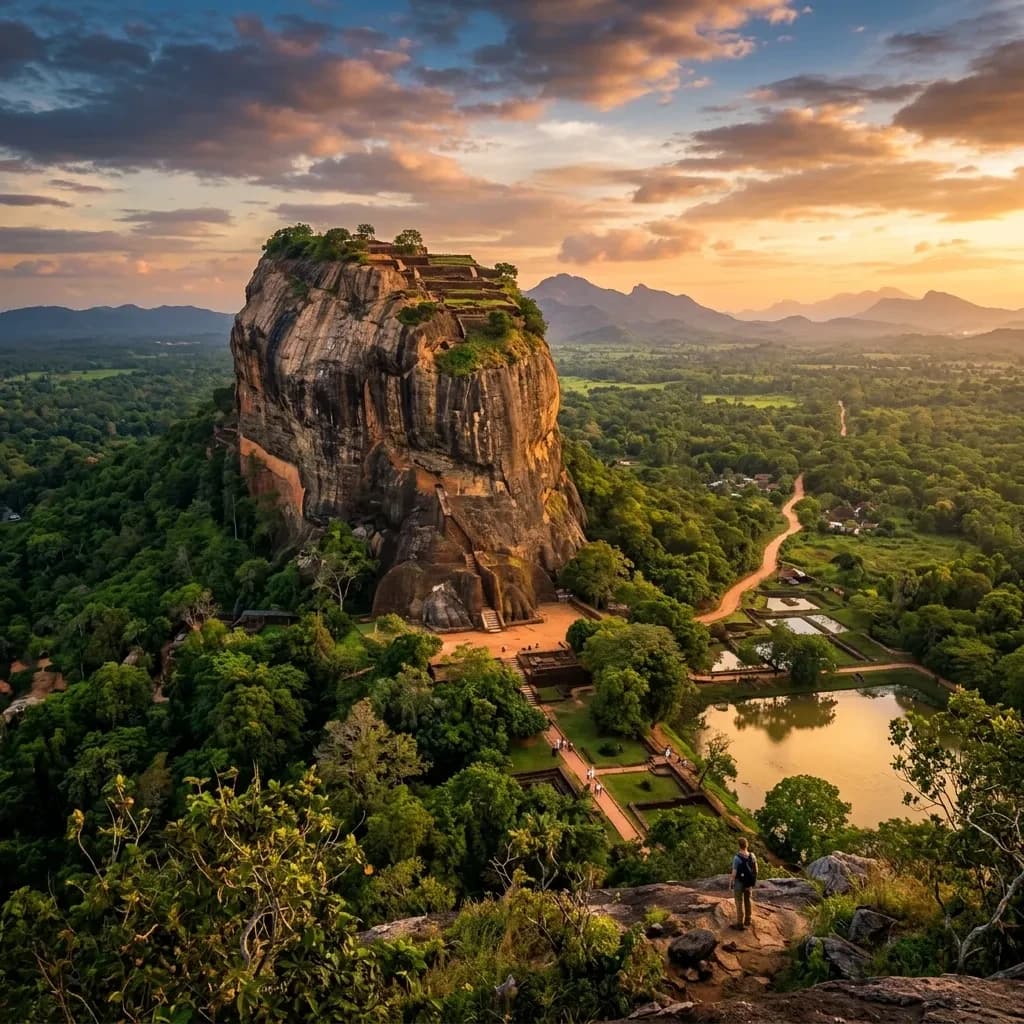
Dambulla sits roughly twenty kilometres south of Sigiriya Rock Fortress. The two UNESCO sites complement each other perfectly in a single day.
Sigiriya represents royal ambition, military defense, and daring engineering. Dambulla offers spiritual peace, sacred art, and quiet stone chambers.
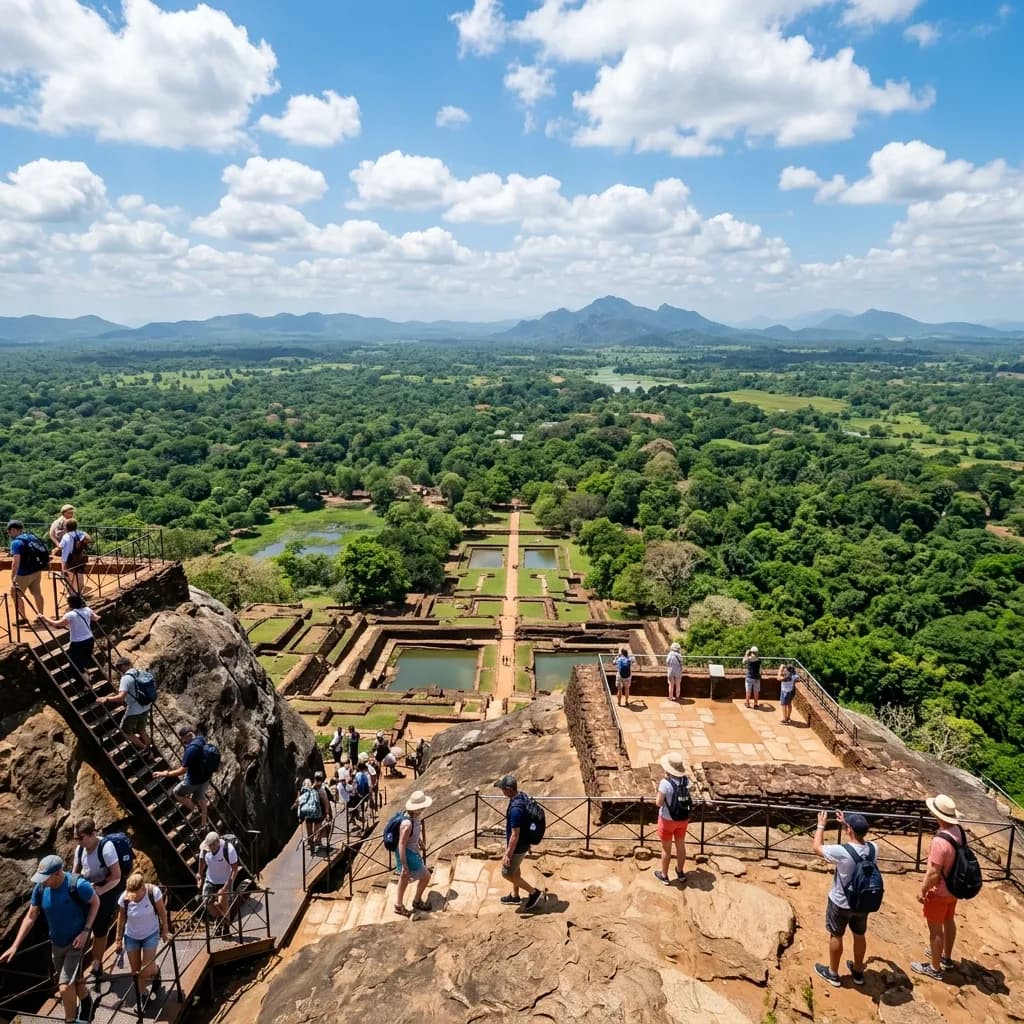
Start your day climbing Sigiriya at 6:30 AM to beat the morning crowds. Rest during the hottest midday hours. Climb Dambulla around 4:00 PM as the day cools. This balanced pairing delivers the ultimate Cultural Triangle experience.
The Final Verdict: Living Stone
Emerging from Dambulla's dim caverns back onto the breezy terrace, your eyes readjust to the blinding daylight. Spread below you is an unbroken expanse of emerald forest, with ancient irrigation reservoirs gleaming in the distance.
Dambulla is much more than an archaeological relic preserved behind museum glass. It is a living sanctuary of faith, endurance, and artistic brilliance. For twenty-two centuries, monks and pilgrims have kept these oil lamps burning. Standing in these quiet chambers, you touch an unbroken thread of devotion carved straight into the living mountain.
Want to explore more?
Download our comprehensive E-Travel Guidebook for Ella.