Climbing Sigiriya Rock: What the Climb Is Really Like
By Stay Lanka Travels
Find out what it's really like to climb Sigiriya Rock. Tips, what to expect, and why reaching the summit is an unforgettable experience.
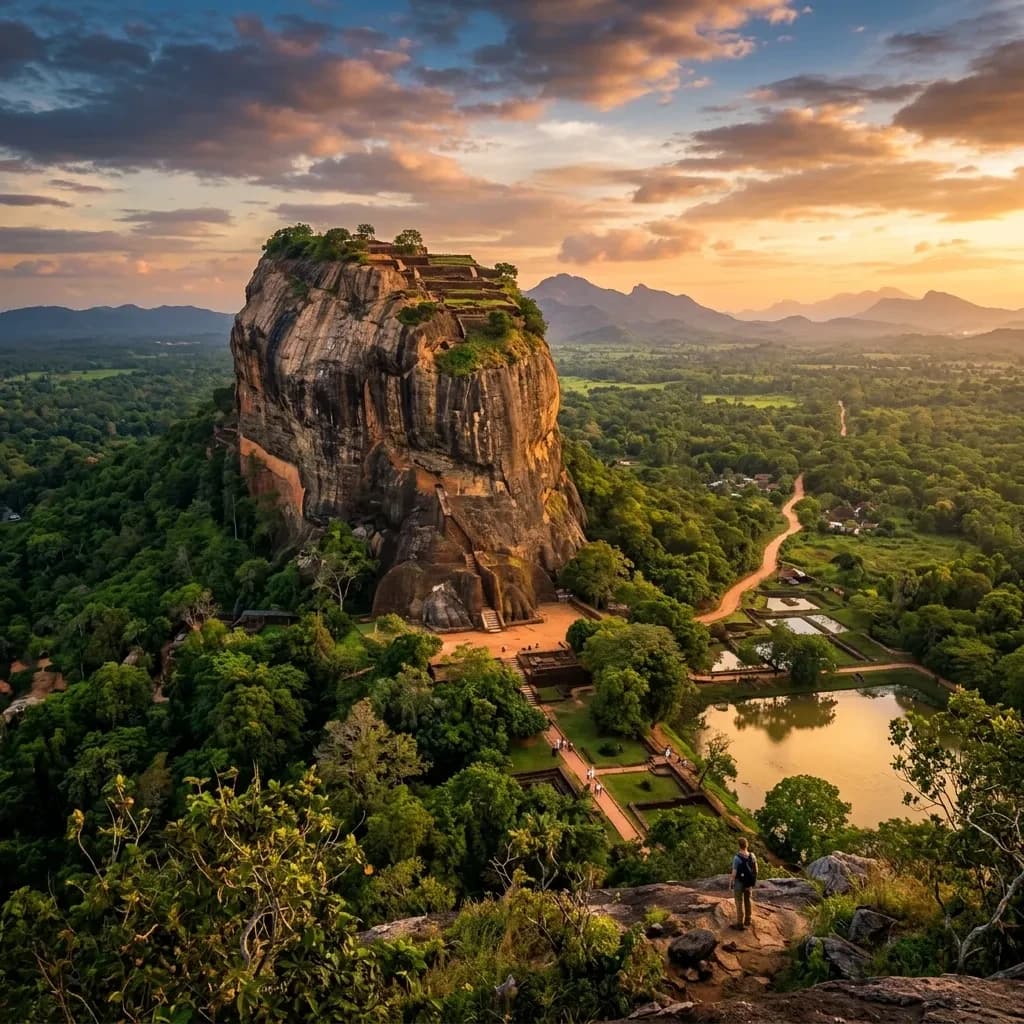
From the outer moat, Sigiriya's granite pillar looks like a solid wall with no obvious way up. Then you cross the drawbridge, step onto the first garden pathway, and the illusion breaks: this isn't a single hike up a rock, it's a walk through the layout of an entire ancient royal city, one that just happens to end 200 metres in the air.
Sigiriya was King Kasyapa's fortress-palace, built in the 5th century after he took the throne from his father and moved his capital here, reportedly out of fear that his exiled half-brother would return to reclaim it. What he left behind blends defensive architecture, working hydraulic engineering, and some of the finest surviving classical art in South Asia , all wrapped around one genuinely demanding physical climb. Here's what that climb actually involves, stage by stage.
How Challenging Is the Climb?
You don't need mountain hiking experience to climb Sigiriya. The entire trail is built infrastructure , stone stairs, brick pathways, and cantilevered metal stairways bolted to the rock face , so there's no scrambling or route-finding involved. The real challenges are the tropical heat, roughly 1,200 steps of elevation gain, and a final stretch of open, exposed height near the summit.
Pacing is what makes or breaks the experience. The route has multiple shaded rest terraces built in along the way, and there's no penalty for using them. Treating the climb as four separate, manageable stages, rather than one long staircase, changes how it feels almost immediately.
Stage 1: The Water and Boulder Gardens
The climb starts flat, along the manicured axes of the 5th-century Water Gardens. Underground conduits still feed the symmetrical ponds, small water cascades, and sunken limestone pavilions here, largely unchanged from their original design. It's worth stopping to look back across the lily ponds toward the rock , this is the angle that makes the citadel's scale click for most first-time visitors.
From the Water Gardens, the path rises gently into the Boulder Gardens, where stone steps curve between massive granite boulders. Some of these boulders once formed defensive ambush posts; others show carved sockets where monastic shelters were built directly into the rock. This is also where the terrain shifts for good , flat garden walking ends here, and the path begins climbing in earnest toward the base of the rock face itself.
Stage 2: The Frescoes and Mirror Wall
As the path starts hugging the cliff, a sheltered brick walkway leads to an enclosed spiral staircase built into the rock. Climbing this metal spiral brings you face-to-face with the Sigiriya Frescoes: painted figures roughly 1,500 years old, still showing remarkable pigment brilliance. The paintings depict celestial women, floating on clouds and holding lotus blossoms, and the surviving detail in their jewelry and expressions is sharp enough to photograph clearly. Touching the plaster isn't permitted , the surface is original and irreplaceable, and oils from skin contact accelerate its deterioration.
Descending the spiral staircase, the path runs along the Mirror Wall next. Ancient builders polished this brick parapet with a mix of lime and egg white until it reflected the king as he walked past it. Centuries of visitors later scratched poetic verses into that same surface, leaving behind some of the oldest surviving examples of Sinhalese graffiti , a strange kind of layered history, where 8th-century poetry sits inches from 5th-century royal engineering.
Stage 3: The Lion's Paws Plateau
The halfway plateau is the largest rest stop on the climb, and most people take it. This is where the famous Lion's Paws sit: two enormous stone claws carved directly from the bedrock, framing what was once the entrance to the palace staircase above. Originally, a full brick lion sat here, and visitors climbed a staircase that ran up through the statue's mouth. Only the paws survive today, but their scale alone gives a sense of how imposing the original structure must have been.
This terrace is the right place to drink water and stretch before the final push , the next section is the steepest and most exposed part of the entire route.
Stage 4: The Final Exposed Staircase
The last 100 vertical metres are the most demanding, and the most memorable, part of the climb. A modern steel staircase with handrails on both sides bolts directly into the vertical granite face, with open drops visible beneath it in places. If you're prone to vertigo, keep your eyes on the steps directly ahead and keep one hand on the rail. The staircase is wide enough for two-way traffic, so use the landings to pause and let faster climbers pass rather than trying to keep pace with a group.
The Summit Experience
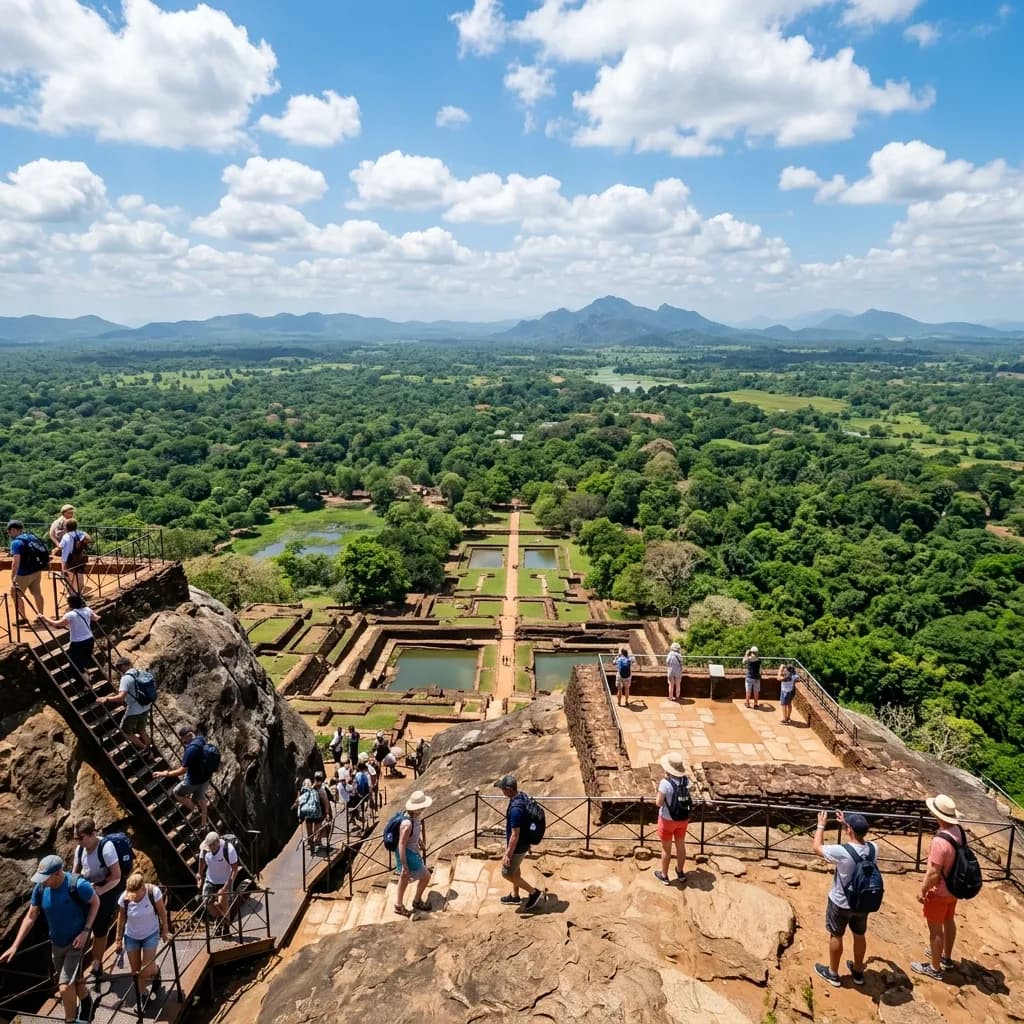
The top terrace opens onto the ruins of King Kasyapa's sky palace: the foundations of a royal reception hall, private chambers, and a large swimming pool cut directly into the bedrock to catch rainwater. Walking between the low brick walls, it's easy to trace where rooms once stood, even without a guide , the outlines of the palace's layout are still legible in the stonework underfoot. From here, the view runs unbroken across dry-zone forest, scattered reservoirs known locally as wewas, and the outline of Pidurangala Rock rising from the plain nearby. Standing on the same terrace a king once ruled from is what makes the climb feel worth the sweat , the landscape below reads differently once you've seen it from up here, and most visitors linger far longer at the top than they expected to.
Recommended Timing and Packing
Start early to beat the heat. Entering right at 6:30 AM, when the gates open, lets you finish the ascent before the sun gets high enough to make the exposed sections uncomfortable. If mornings don't suit your schedule, climbing around 3:30 PM works almost as well , the light is softer for photos, and the worst of the afternoon heat has already passed.
Pack light, since you'll want both hands free on the stairs:
- Water: At least 1.5 litres per person , nothing is sold past the entrance.
- Footwear: Shoes or sandals with real grip; the older stone steps are worn smooth.
- Sun protection: A hat and sunscreen, since the upper rock face has no shade.
- Bag: A lightweight waist pack or small backpack , a full daypack is awkward on the narrower stairways.
Exploring Beyond Sigiriya
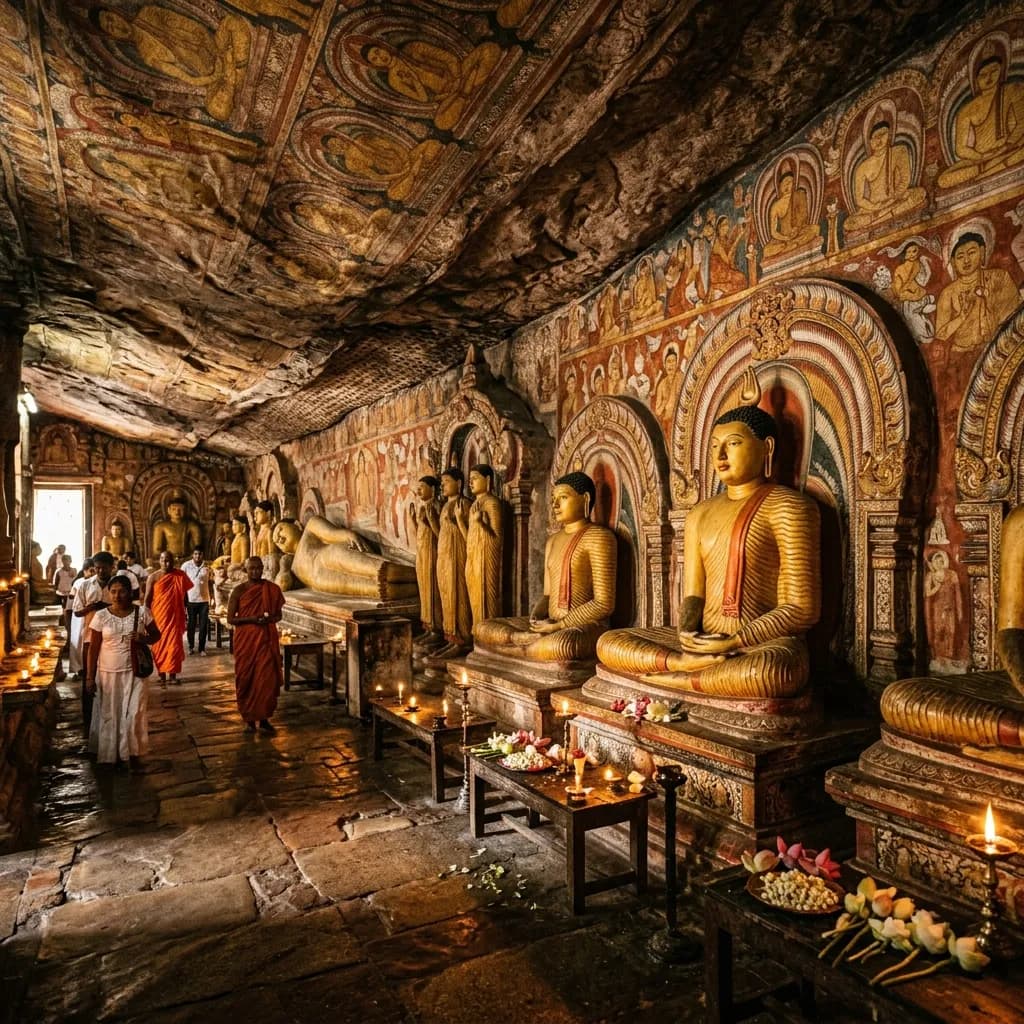
Sigiriya pairs naturally with the Dambulla Cave Temple, about 30 minutes south. Where Sigiriya is about royal power and engineering, Dambulla is quieter and more devotional , painted cave shrines and meditation halls carved into a different rock outcrop entirely. Visiting both in the same trip gives a fuller picture of how the same landscape shaped both royal and religious life in ancient Sri Lanka.
The Final Verdict
Climbing Sigiriya is demanding, sweaty, and genuinely exhilarating in roughly equal measure. Your legs will ache by the final staircase, and your pulse will be up well before you reach the top. Few climbs anywhere pack this much history into a single ascent , you're not just gaining elevation, you're walking through the actual sequence of a 5th-century construction project, from irrigation at the base to a king's private throne at the summit.
But standing on that breezy summit plateau, looking out over the same forest a 5th-century king once ruled, every one of those 1,200 steps stops feeling like a workout and starts feeling like the point of the trip. Sigiriya isn't a monument you view from a distance , it's one you have to climb to actually understand, and that's exactly what makes it worth the effort.
Want to explore more?
Download our comprehensive E-Travel Guidebook for Ella.