Hidden Gems of Galle Fort: A Local's Guide
By Stay Lanka Travels
Go beyond the tourist trail and discover the secret cafés, artisan workshops, and quiet corners of Sri Lanka's most charming UNESCO World Heritage Site.
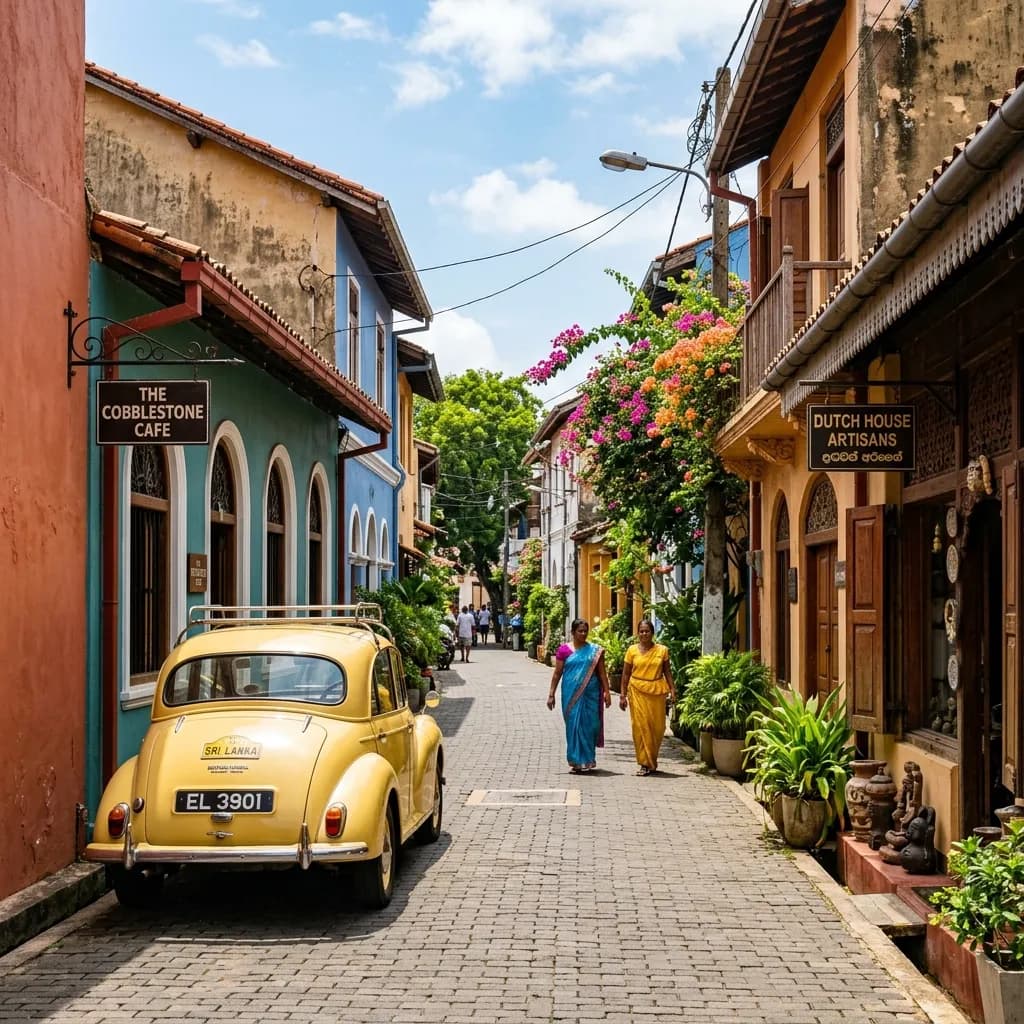
Turn off the sun-drenched corridor of Church Street down the narrow corridor of Leyn Baan Street. Suddenly, the street noise vanishes.
Fifty-centimetre-thick coral walls mute the ocean surf into a gentle whisper. Bougainvillea vines spill vibrant magenta blossoms over whitewashed parapets. Weathered Dutch fanlights filter soft morning light onto worn cobblestones.
Most day-trippers march straight along Lighthouse Street toward the white beacon or the crowded ramparts at Flag Rock.
They take photos of the lighthouse, browse air-conditioned souvenir boutiques, and leave by sunset.
Yet Galle Fort's genuine magic hides along its quiet residential alleys, forgotten gun bastions, and centuries-old artisan workshops.
Within this thirty-six-hectare UNESCO World Heritage fortress, living history survives behind heavy teak doors. Here is your insider guide to the hidden corners, secret views, and vanishing crafts of Galle Fort.
A Living Citadel: Multi-Ethnic History Behind the Walls
Galle Fort is not a sterile open-air museum. It is an active, multi-ethnic residential community with a rich tapestry of living cultures.
First established by the Portuguese in 1588, the fortress was extensively rebuilt and expanded by the Dutch East India Company (VOC) after 1640. When the British assumed control in 1796, they added administrative offices, schools, and courtrooms without altering the primary street grid.
Today, roughly four hundred families live inside the fortress walls. Sri Lankan Moor gem merchants trace their lineage back to 8th-century Arab traders who anchored in Galle harbor.
They live alongside Dutch and Portuguese Burghers and Sinhalese families whose ancestors have inhabited these coral villas for generations.
This massive engineering feat saved thousands of lives during the devastating 2004 Indian Ocean tsunami. The 17th-century ramparts absorbed the catastrophic force of the waves, protecting the interior streets from destruction while surrounding coastal areas suffered ruin.
Hidden Architectural Secrets: The Old Gate and the Sally Port
Most travelers enter Galle Fort through the towering British Main Gate built in 1873. If you want to touch authentic 17th-century masonry, seek out the Dutch Old Gate near the harbor wall.
Built in 1669, this heavy stone portal bears two distinct colonial histories on its masonry:
- The Outer Wall: Facing the busy modern harbor, the archway features the British Royal Coat of Arms carved during Queen Victoria's reign.
- The Inner Wall: Walk through the vaulted tunnel into the fort. Look up to see the original VOC monogram flanked by two carved lions and a cock.
Look closely at the lower masonry. You can still see rusted iron mooring rings where 17th-century merchant sloops tied up directly alongside the rampart wharves.
Just around the corner from the Old Gate sits an underground sally port. Dutch defenders used this narrow subterranean stone tunnel as an escape route and secret water exit.
Walk through the cool, damp passageway to reach the rocky shoreline below. Look into the crystal-clear shallows near the coral reef. At low tide, wild green sea turtles frequently surface here to feed on sea grass, unnoticed by crowds above.
Walking the Unmarked Alleys: Leyn Baan and Parawa Streets
To experience the fort's residential soul, spend a morning wandering its quietest residential lanes.
Leyn Baan Street translates from Dutch as Rope-Walk Street. During the VOC era, sailors twisted coconut coir into heavy ship rigging along this straight road.
Today, it is a peaceful avenue lined with 18th-century merchant residences. Look closely at the architectural details:
- Carved Transoms: Elaborate ebony and calamander wood fanlights above doorways designed to channel sea breezes into high-ceilinged rooms.
- Deep Verandahs: Shaded street porches where elderly residents sit on rattan planter's chairs reading morning newspapers.
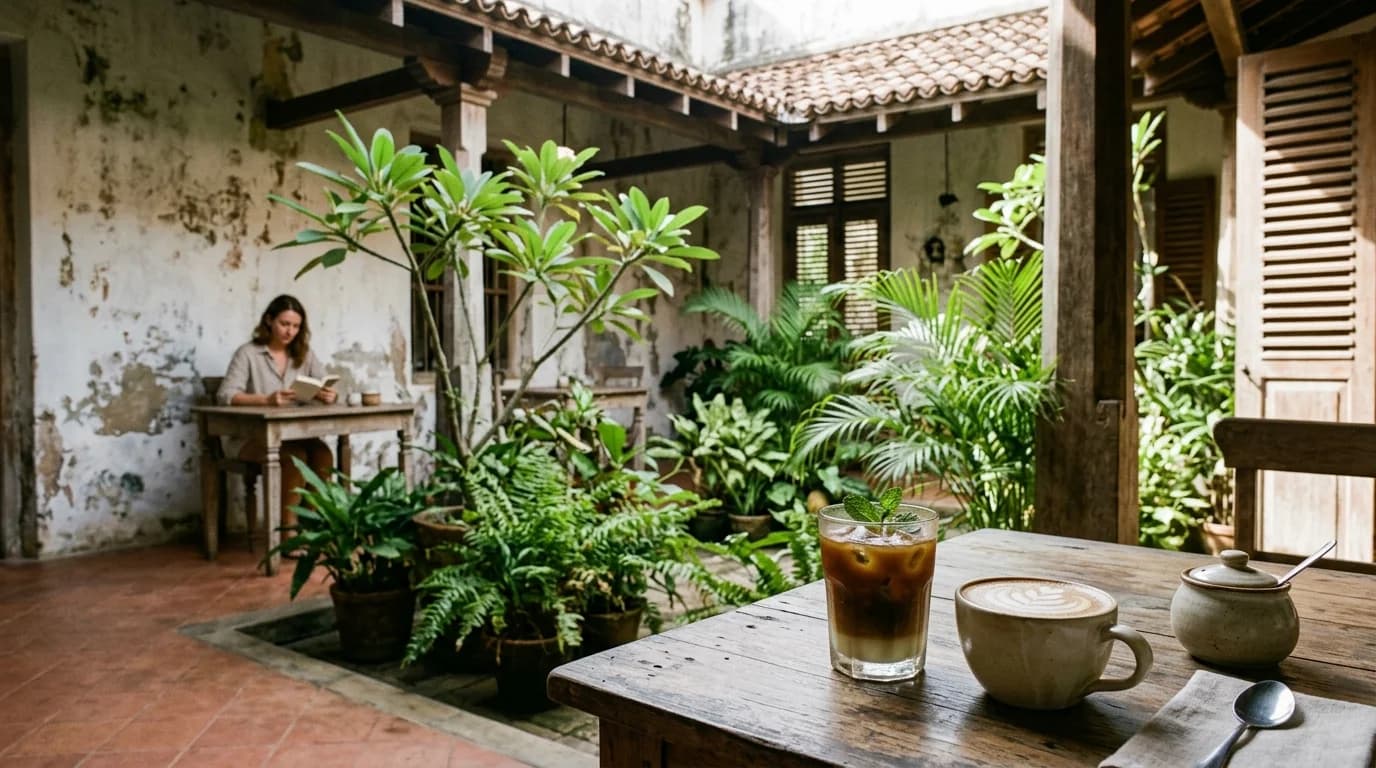
- Central Courtyards (Meda Midula): Hidden open-sky gardens planted with frangipani trees and ferns, creating natural cooling zones.
Cross over to Parawa Street and Chando Street. Here, narrow alleyways lead into hidden courtyard cafés where you can sip fresh king coconut water away from tour groups.
Vanishing Crafts: Beeralu Lace and Manual Lapidaries
Behind the tourist jewelry storefronts, Galle Fort preserves two of Sri Lanka's rarest traditional craft disciplines:
1. Beeralu Bobbin Lace Weaving
Introduced by Portuguese settlers in the 16th century, Beeralu lace-making is an intricate textile art. Elderly craftswomen sit on shady verandahs with a cylindrical pillow (beeralu kotte) balanced on their knees.
With hypnotic rhythm and astonishing speed, their fingers twist dozens of turned wooden bobbins, weaving delicate floral patterns from fine cotton thread. Supporting these local artisans directly preserves an indigenous textile heritage that is rapidly vanishing.
2. Manual Gem Cutting on Traditional Lapidary Wheels
Galle has been a global trading capital for unheated Ceylon sapphires for over two thousand years. While large jewelry showrooms use modern electric saws, a few master gem cutters still work along Pedlar Street using hand-turned bow-powered lapidary wheels.
Using emery powder and lead plates, they cut and polish rough blue sapphires, padparadscha gems, and star rubies with remarkable precision. Traditional merchants examine rough stones under northern daylight with brass tweezers and ten-power loupes. Watching a craftsman assess light refraction on a raw crystal offers an unforgettable glimpse into ancient trade craft.
Solitary Bastions: Escaping the Sunset Crowds
At 5:30 PM, hundreds of tourists congregate at Flag Rock and the white lighthouse to watch sunset over the ocean.
For a far more serene experience, walk west along the high grass ramparts toward Triton Bastion and Star Bastion.
Triton Bastion juts into the ocean at the fort's southwestern corner. Its elevated stone platform once supported heavy brass cannons guarding the maritime approaches.
Today, it offers unbroken 180-degree vistas across the Indian Ocean without the selfie sticks. Sit atop the massive granite blocks as the sun sinks into the sea. Below, Atlantic-origin swells crash against ancient coral foundations, spraying cool ocean mist into the evening air.
Follow the rampart wall north to Star Bastion. From here, you look across Galle Bay toward the jungle-draped headland of Rumassala, watching colorful wooden outrigger fishing boats motor out for the night.
Moon Bastion and Sun Bastion guard the northern land gate. Their grassy embankments overlook the international cricket stadium and the bustling modern city outside.
Galle Fort After Dark: Lanterns and Coastal Whispers
Galle Fort undergoes a dramatic transformation the moment day-tour buses return to Colombo at dusk.
The tempo slows to a gentle stroll. Yellow sodium streetlamps illuminate damp terracotta roof tiles and cobblestone gutters.
The atmospheric evening sounds are unforgettable. The solemn call to prayer from the 1904 Meera Mosque echoes across the harbor. Moments later, church bells ring out from the 18th-century Dutch Reformed Church and All Saints Anglican Church.
Wander through the dimly lit lanes after eight in the evening. Acoustic music drifts from intimate courtyard bistros. Cool sea breezes blow freely over the ramparts, bringing the unmistakable scent of salt spray and tropical night-blooming jasmine.
Tactical Visitor Advice for Independent Wanderers
To make the most of your explorations, follow these local recommendations:
- Best Walking Hours: Explore between 7:00 AM and 9:00 AM before the sun climbs high. Early mornings offer empty streets, soft golden light for photography, and active birdlife.
- Respect Residential Verandahs: Galle Fort is home to real families. Avoid peering through private front windows, and always ask politely before photographing residents on their porches.
- Footwear Realities: Cobblestones and uneven rampart pavers can be hazardous in flimsy flip-flops. Wear sturdy sandals or cushioned walking shoes.
The Final Reflection: A Living Fortress
Galle Fort's greatest gift is its enduring authenticity. It is a monument that refuses to become a relic.
Children still play cricket on grassy ramparts. Lace bobbins click on quiet verandas, and neighbors chat in shaded doorways. The fort remains truly alive. Step away from the crowds, explore the quiet lanes, and let the stones tell their stories.
Want to explore more?
Download our comprehensive E-Travel Guidebook for Ella.