A Guide to Climbing Sigiriya Lion Rock
By Stay Lanka Travels
Tips for visiting the Eighth Wonder of the World, including the best time to go and what to see along the way.
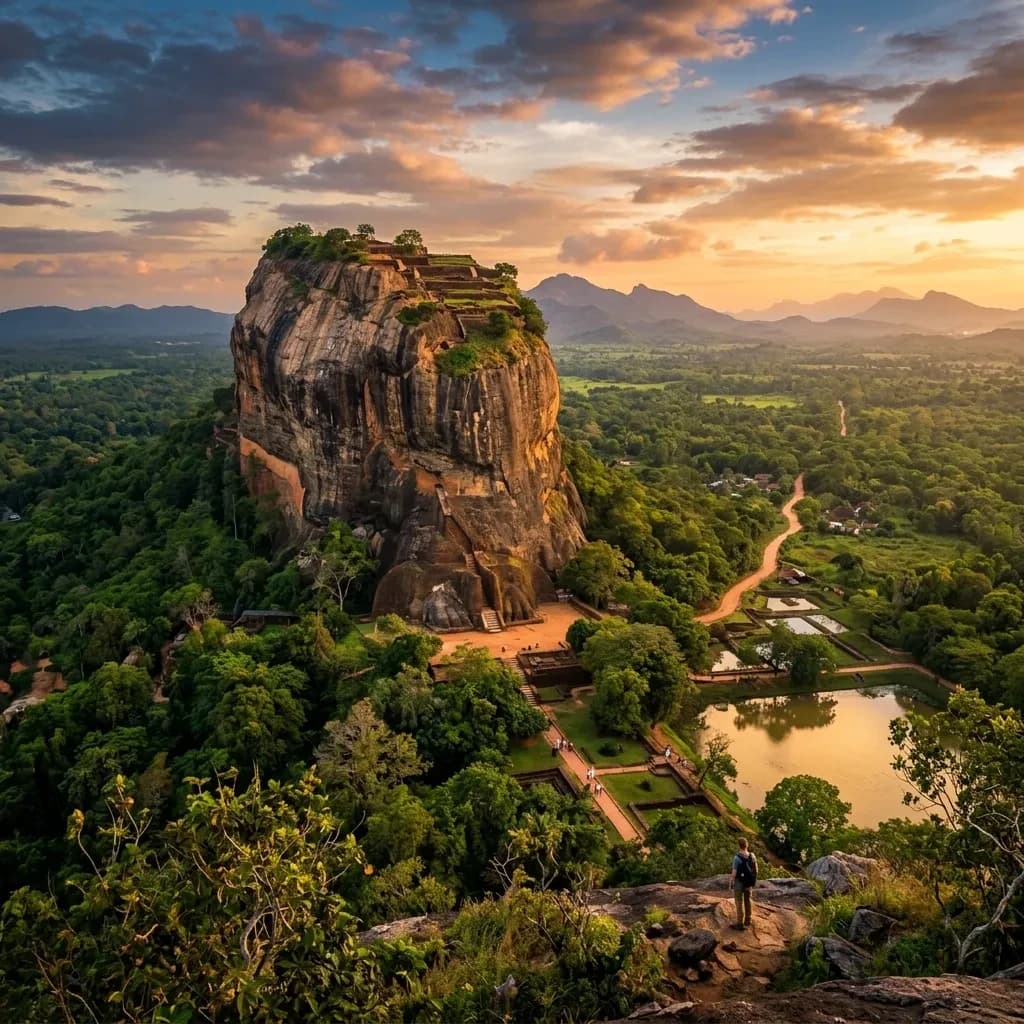
At dawn, before the tour buses arrive, Sigiriya Lion Rock breaks through the morning mist like a broken tooth jutting out of the flat Dambulla plain. It rises 200 metres straight out of dry-zone forest, and in the 5th century, King Kasyapa turned its summit into a royal citadel , reportedly after seizing the throne from his father and fearing revenge from his exiled half-brother, Moggallana.
Climbing the 1,200 steps to the top means passing through geometric water gardens, ducking past cliff-face frescoes older than most European cathedrals, and walking between the stone paws of a gateway that once had a full carved lion's head above it. The climb is steep, exposed, and best tackled early. The engineering underfoot and the view from the summit make it worth the sweat.
Kasyapa ruled from Sigiriya for close to two decades before his brother returned with an army and reclaimed the throne. After that, the site's purpose shifted: Buddhist monks used the rock and its surrounding caves as a monastery for several centuries, long after the royal palace above had been abandoned. That layered history , fortress, palace, monastery, and now UNESCO World Heritage Site , is part of why Sigiriya draws comparisons to sites like Petra or Machu Picchu, and why it's sometimes billed as the Eighth Wonder of the World. Few ancient structures combine defensive engineering, formal garden design, and fine art in one climb.
The Ascent Route and Key Landmarks
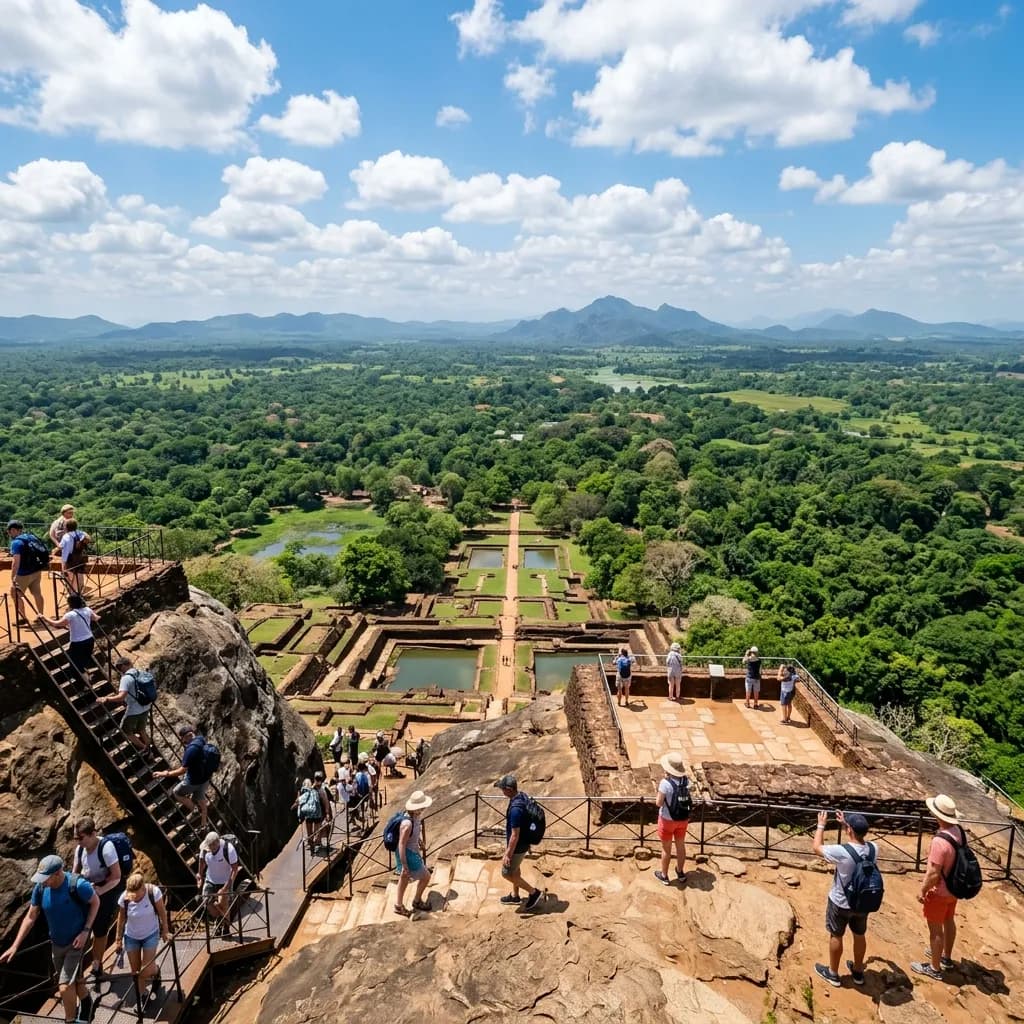
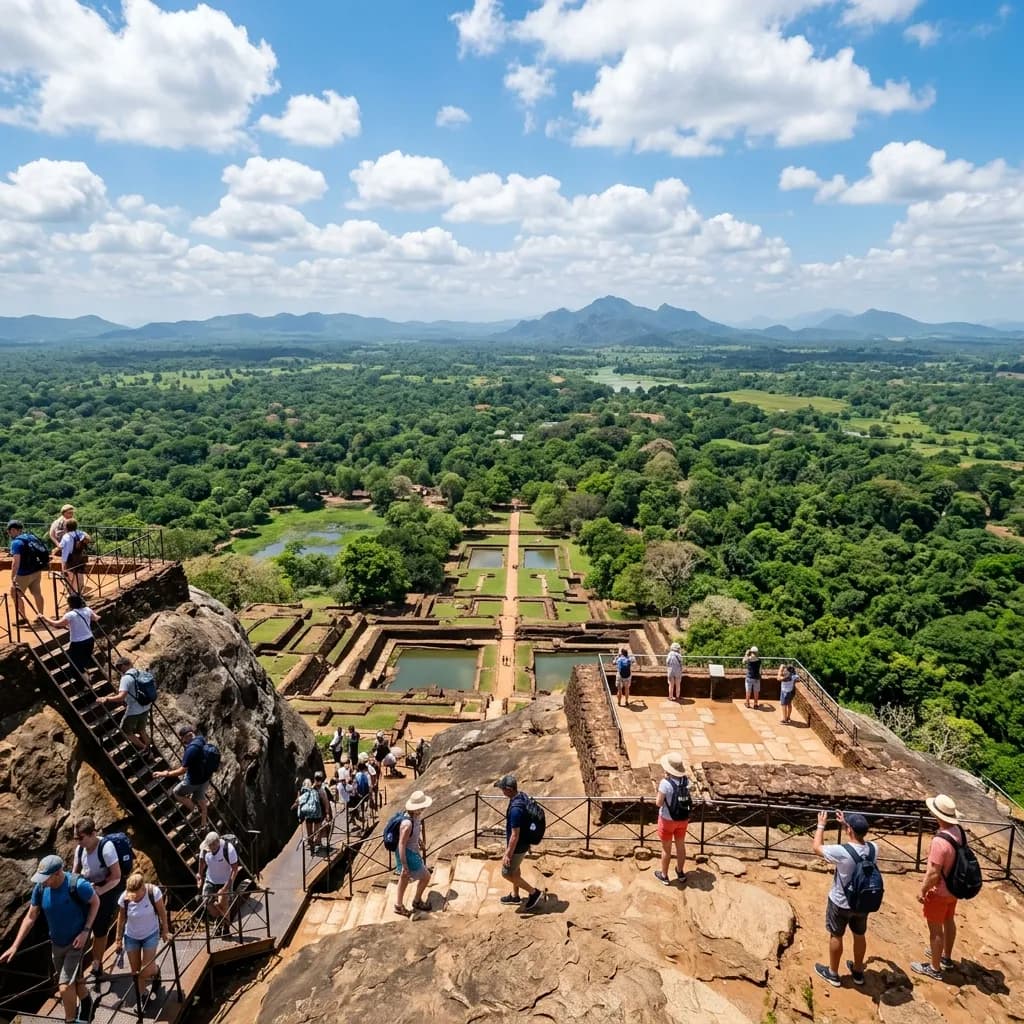
The walk begins in the Water Gardens at the rock's base , a set of symmetrical pools, moats, and fountains laid out with striking precision for a structure this old. The fountains are gravity-fed, with no pumps or modern parts, and several still spurt water during heavy monsoon rain. It's a rare case of a 1,500-year-old hydraulic system still doing its job. Walking through the gardens in early morning light, with mist still sitting on the water, gives a sense of how deliberately the whole approach to the rock was designed , this was meant to impress visitors long before they even reached the base of the climb.
Past the Water Gardens, the path enters a second, distinct section known as the Boulder Gardens: a stretch where massive granite rocks, some split by centuries of tree roots, frame narrow stone staircases and shaded resting spots. Several of these boulders show carved sockets and grooves cut into their surface, remnants of monastic buildings that once stood on top of them, supported by wooden beams slotted directly into the rock. From here, a spiral metal staircase bolted directly to the cliff face climbs to a sheltered pocket in the rock face , the Sigiriya Frescoes.
These 5th-century paintings depict the Apsaras, or celestial nymphs, rendered in natural earth pigments applied straight onto wet plaster. Only a fraction of the original gallery survives , most of the rock face was left bare or has weathered away , but what remains is remarkably vivid for its age, with detail still visible in the jewelry, hairstyles, and flowers the figures hold. Photography is generally permitted here, though flash is discouraged to protect the pigment.
Past the frescoes, the path runs along the Mirror Wall, a brick parapet that ancient builders coated with a glaze of egg white, lime, and wild honey , polished to a shine that reportedly let the king see his own reflection as he walked past. Travelers scratched poetic verses into that surface over the centuries, leaving behind some of the oldest surviving examples of Sinhalese graffiti, much of it written by visitors reacting to the frescoes they'd just seen above.
At the halfway terrace, the climb reaches the Lion's Paws: two enormous claws carved directly out of the bedrock, flanking what was once a full lion-shaped entrance carved into the rock face itself. Only the paws and parts of the surrounding brickwork survive today, but early accounts and surviving fragments suggest the original structure had a lion's head large enough to be seen from the base of the rock. Between those paws begins the final ascent , cantilevered iron staircases fixed to the near-vertical granite face, leading up to the open, breezy summit.
The Summit Citadel
The summit itself is a flat, 1.6-hectare plateau holding the foundations of Kasyapa's royal palace: ruined brick terraces, a carved granite throne, and a large rock-cut bathing pool that would have caught rainwater for the palace above. Wind picks up noticeably once you're above the treeline, which makes the summit a welcome relief after the exposed final staircase. From up here, the view stretches for miles across untouched forest, emerald paddy fields, and the distant silhouette of Pidurangala Rock , a smaller rock formation directly across the plain, and a popular spot to photograph Sigiriya itself from a distance. Many visitors climb Pidurangala the following morning specifically to get that outward view of Sigiriya rising out of the jungle.
Best Time to Climb
Highland heat turns midday ascents into a slog, so timing matters more than most visitors expect. Aim to be at the gate when it opens at 6:30 AM. The morning air is still cool, arriving groups are smaller, and early light hits the eastern plains at an angle that makes the frescoes and gardens easier to photograph. If mornings don't work, start around 3:30 PM instead , the worst of the midday heat has passed by then, and the late-afternoon light bathes the rock face in warm gold. Whichever slot you choose, avoid starting the climb between roughly 11 AM and 2 PM, when the exposed staircases and bare rock offer no shade at all.
Getting There and Planning Your Visit
Sigiriya sits close to Dambulla, making it an easy half-day trip if you're already based there, and a common stop on the wider Cultural Triangle route alongside Anuradhapura and Polonnaruwa. Set aside at least three hours total for the visit: roughly an hour for the climb up, time at the summit to take in the views and rest, and another 45 minutes or so coming back down, since the descent is slower than most people expect on the narrow metal staircases. Tickets are sold at the entrance near the Water Gardens, and it's worth arriving with the exact climb in mind rather than deciding on the fly, since the site is large enough that backtracking costs real time.
Practical Packing Essentials
Pack light and keep your hands free for the stairs:
- Water: Carry at least 1.5 litres per person. Nothing is sold past the ticket checkpoint.
- Footwear: Wear running shoes or hiking sandals with real tread , the stone steps are worn smooth in places.
- Sun protection: Bring a wide-brim hat and sunscreen. The upper rock face has no shade at all.
- Rain cover: Pack a lightweight rain shell if you're visiting during the monsoon months.
Physical Demands and Accessibility
Most visitors in reasonable shape reach the summit in 45 to 60 minutes. The route has plenty of wide platforms along the way, so there's no shortage of places to stop, catch your breath, and let faster groups pass. That said, this isn't a casual stroll , the final stretch involves narrow, open-sided metal staircases with real drops beneath them, and anyone with severe vertigo should know that section is coming before they commit to the climb. The staircases can also get crowded during peak season, since only a limited number of people can be on them at once, so budget extra time if you're visiting during a busy month.
Travelers with mobility issues, young children, or anyone uneasy on open heights should weigh the final staircase carefully , there's no alternate route around it, and turning back partway is common and nothing to be embarrassed about. The Water Gardens and Boulder Gardens alone are worth the trip even if you don't go all the way to the summit.
Why Sigiriya Captivates the World
Sigiriya isn't just a good photo opportunity , it's a rare case of an ancient civilization building for beauty and comfort as much as for defense. Within a single site, the citadel combines fortress architecture, working hydraulic engineering, and some of the oldest surviving landscape art in South Asia. Few places let you trace an entire ancient building project from its irrigation system at the base to a king's private throne at the summit, all in a single climb.
Stand on Kasyapa's summit terrace, where the ruined foundations of a royal palace meet the open wind, and the climb up starts to make sense. The 1,200 steps fade from memory almost as soon as you catch your breath. The sheer audacity of building a palace here at all is what stays with you.
Want to explore more?
Download our comprehensive E-Travel Guidebook for Ella.