Best Sri Lanka Tea Tours: The Complete Ceylon Tea Guide
By Stay Sri Lanka Team
A comprehensive guide to Ceylon tea tourism. Discover the best tea factory tours, history of Ceylon tea, and top tea estates to visit in Sri Lanka’s hill country.
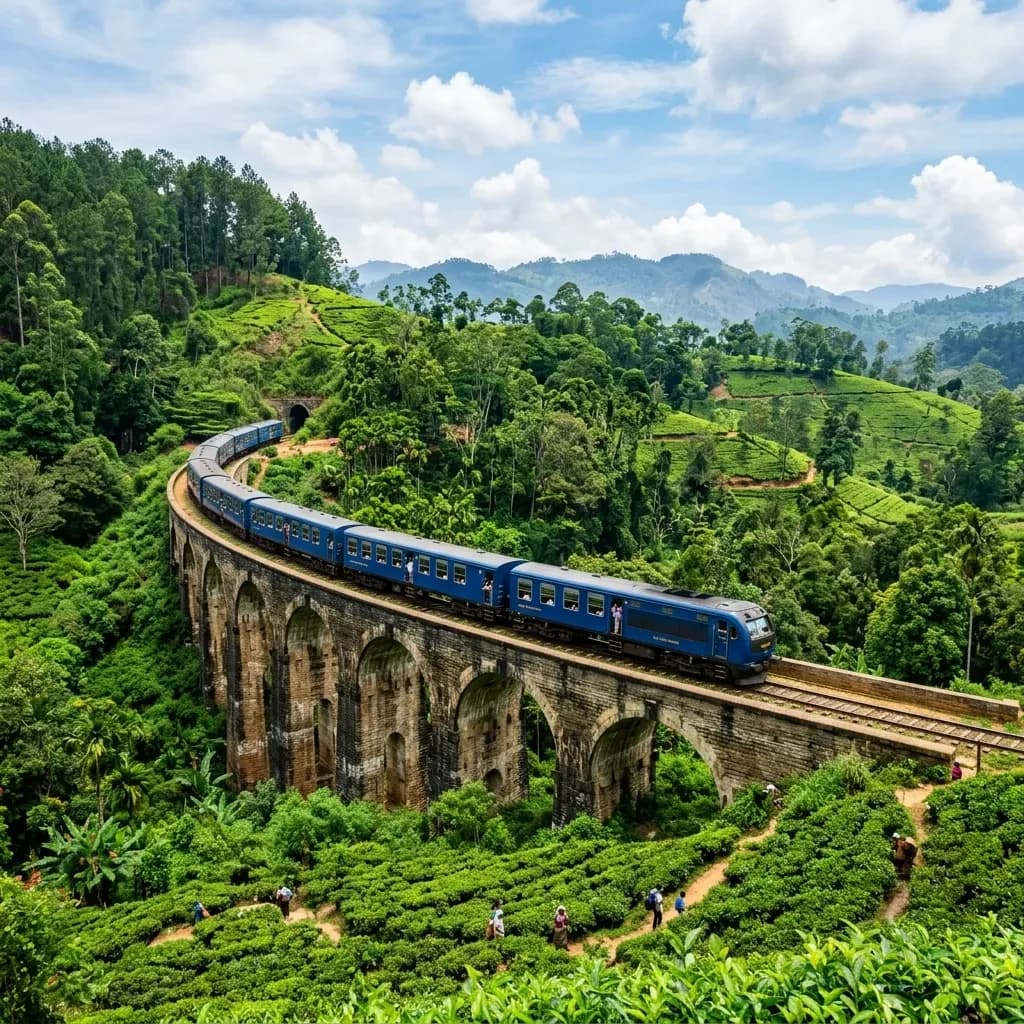
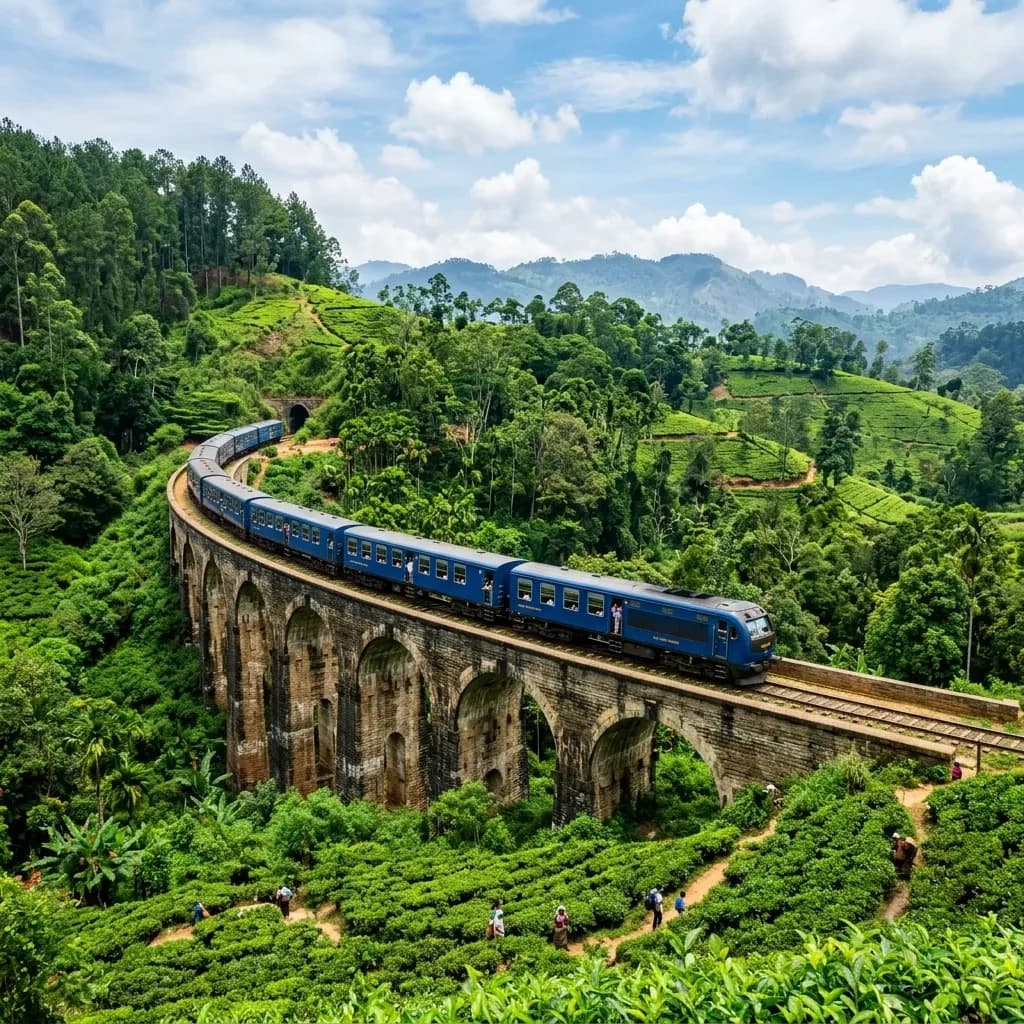
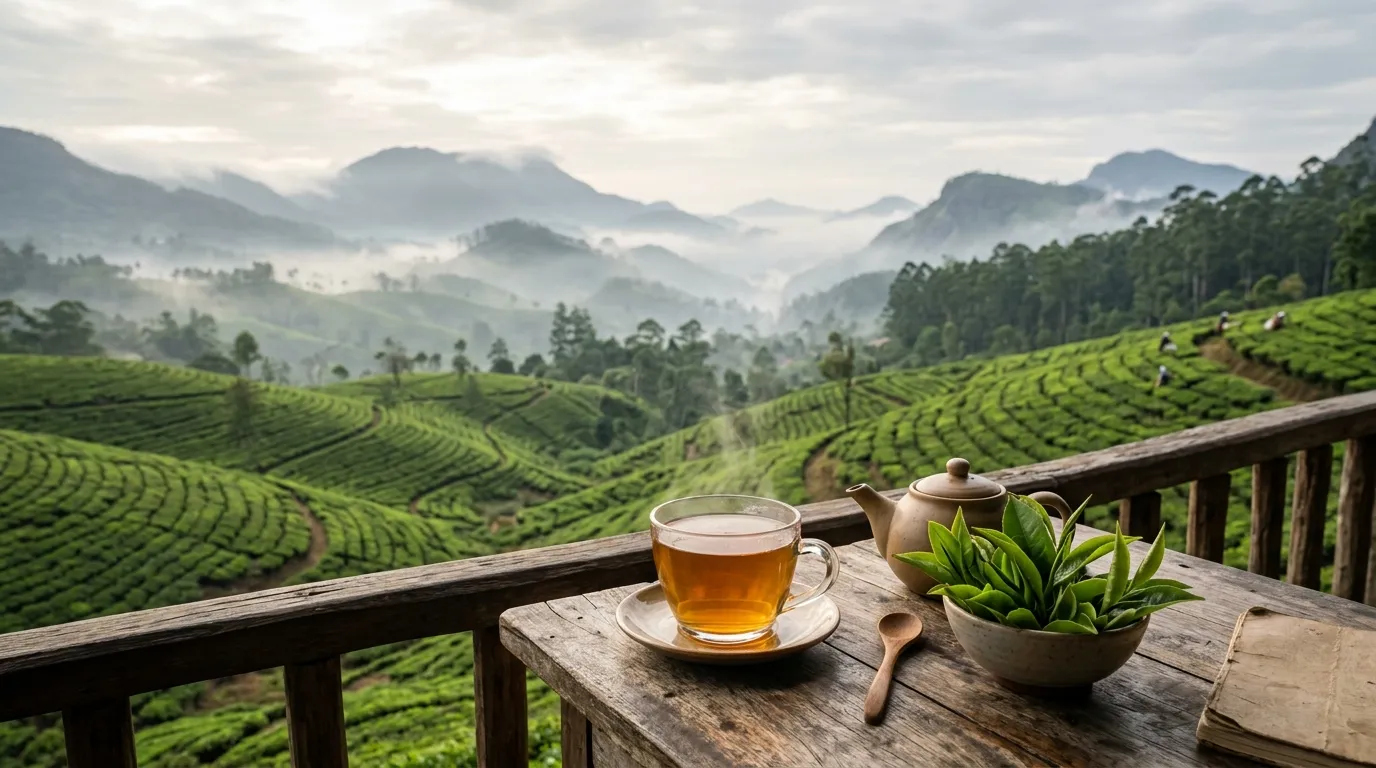
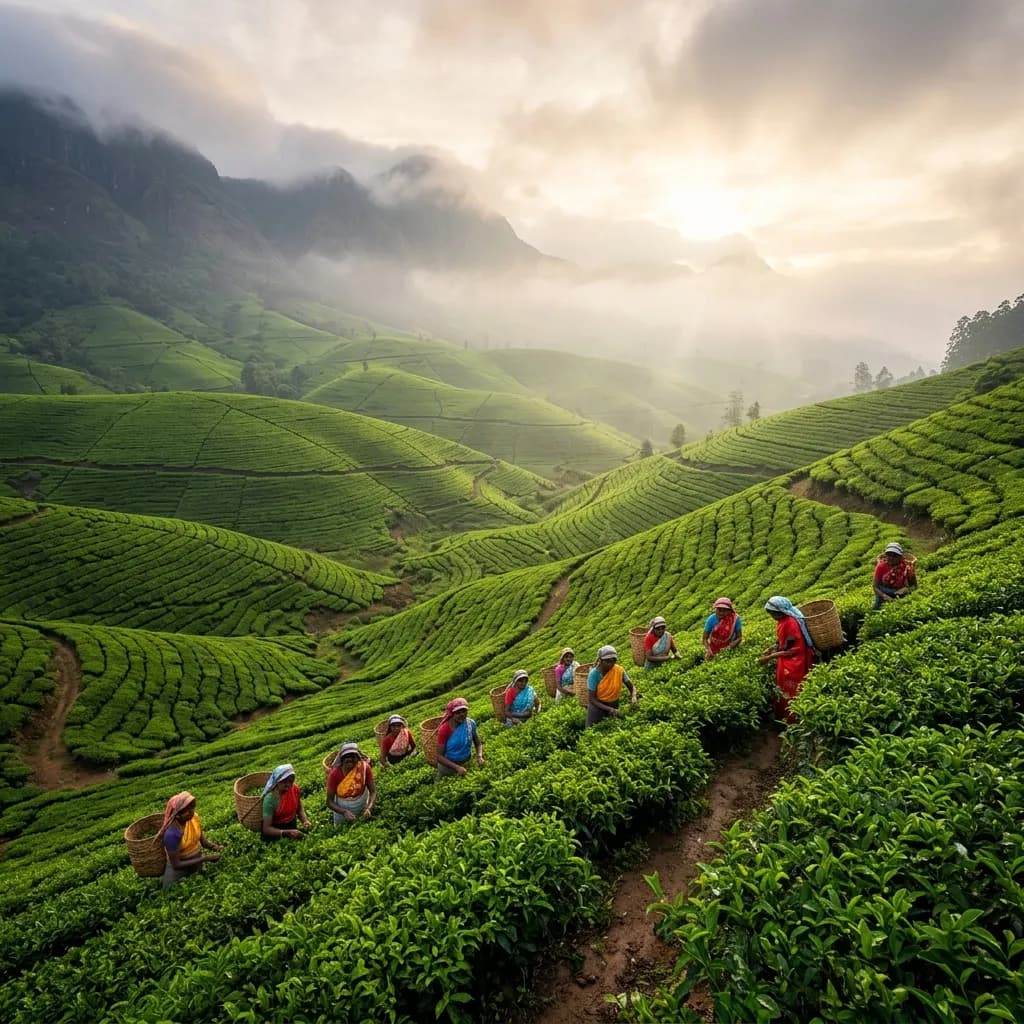
Stand on an open factory veranda in the central highlands at dawn. White mountain mist drifts across steep valleys. As first light strikes the ridges, endless rows of emerald bushes emerge like sculpted velvet.
The air smells damp, crisp, and richly herbal. It carries the unmistakable aroma of warm tea leaves fermenting in nearby drying rooms.
Sri Lanka is the world's fourth-largest tea producer, exporting nearly 300 million kilograms annually. Yet unlike industrialized agricultural giants, the island harvests its crop entirely by hand. On mountain slopes tilted up to sixty degrees, mechanical tractors cannot operate.
Every single kilogram of high-grade Ceylon black tea begins with human hands. Skilled estate pluckers harvest only two tender leaves and a young bud from each shoot.
Visiting a working tea estate is an essential Sri Lankan experience. Here is your definitive field guide to understanding Ceylon tea, touring heritage factories, and visiting the island's top plantations.
The Coffee Blight That Birthed an Empire
Tea was not always the island's defining commercial crop. Throughout the early 19th century, British Ceylon was one of the world's leading coffee producers.
In the late 1860s, disaster struck. A lethal microscopic fungus called coffee leaf rust (Hemileia vastatrix) swept through the central highlands. Within fifteen years, the blight wiped out over 300,000 acres of thriving coffee plantations. British colonial planters faced total financial ruin.
In 1867, a quiet Scottish planter named James Taylor took an audacious gamble. He planted nineteen acres of imported Assam tea bushes in Field Number 7 at Loolecondera Estate near Kandy.
Taylor built a rudimentary rolling machine on his bungalow veranda, powering it with waterwheels. His experiment succeeded beyond all expectations.
The island's acidic highland soil, heavy monsoon rains, and cool mountain air proved ideal for Camellia sinensis. By the early 1890s, tea replaced coffee across the central massif, establishing the global empire of Ceylon tea.
Understanding Ceylon Tea Terroir: The Three Elevations
Not all Ceylon tea tastes the same. The island categorizes its tea into three primary elevation zones, each producing distinct aromas, liquor depths, and flavors:
1. High-Grown Tea (Above 1,200 Metres)
High-grown estates include Nuwara Eliya, Dimbula, and Uva. Because cooler temperatures slow plant growth, leaves develop highly concentrated aromatic compounds.
These teas produce a pale golden liquor celebrated for floral complexity, bright citrus acidity, and delicate muscatel notes. They are often called the "Champagnes of Ceylon tea."
2. Mid-Grown Tea (600 to 1,200 Metres)
Mid-grown estates center around Kandy, Matale, and Nawalapitiya. These elevations produce full-bodied teas with rich copper-red liquor. They offer a rounded maltiness that pairs wonderfully with pastries.
3. Low-Grown Tea (Sea Level to 600 Metres)
Low-grown estates thrive in the warm, humid southern river valleys of Ruhuna and Sabaragamuwa. These teas feature dark, twisted leaves that brew into an intense, pitch-black liquor. They are sweet, heavy, and immensely popular across the Middle East.
The 5-Stage Factory Process: From Leaf to Cup
A guided factory visit reveals an astonishing mechanical ballet. Most highland factories still rely on vintage British-era machinery dating to the 1920s.
The production journey follows five precise stages over twenty-four hours:
- Withering: Freshly plucked leaves are spread across long wooden troughs on the upper floor. Giant fans blow air through the troughs for twelve to eighteen hours, evaporating half the water content.
- Rolling: Heavy brass circular tables twist and crush the limp leaves. This mechanical friction breaks the leaf cell walls, exposing plant enzymes to oxygen.
- Oxidation (Fermentation): Workers spread the crushed green leaf onto cool ceramic tables in a humid fermentation room. Chemical oxidation turns the leaves from lime-green into rich coppery-brown, releasing rich floral aromas.
- Firing (Drying): The oxidized leaves travel on conveyor belts through giant wood-fired furnaces heated to 100°C. High heat stops fermentation instantly, turning the leaf crisp and black.
- Sorting and Grading: Vibrating wire mesh screens separate the dried tea into commercial grades based strictly on particle size.
Top Hill Country Tea Estates to Visit
Sri Lanka boasts dozens of working tea factories open to international visitors. Here are the five finest estates to include in your itinerary:
1. Uva Halpewatte Tea Factory (Ella)
Perched three kilometres north of Ella, Halpewatte is the largest tea manufacturer in the Uva region. Guided tours offer an exceptional, hands-on look at working machinery floors.
The highlight is a second-floor tasting lounge offering sweeping views across deep mountain gorges. You can sample single-estate Uva black teas renowned for their unique wintergreen pungency.
2. Dambatenne Tea Factory and Lipton's Seat (Haputale)
Built in 1890 by grocery titan Sir Thomas Lipton, Dambatenne is an architectural masterpiece. The factory retains original 19th-century pulleys, iron drying racks, and wooden floors.
After touring the factory, take a tuk-tuk or hike seven kilometres through tea hills to Lipton's Seat. At 1,950 metres, this cliff was where Sir Thomas surveyed his vast commercial empire.
3. Pedro Tea Estate (Nuwara Eliya)
Located beneath the misty shadow of Mount Pidurutalagala, Pedro specializes in light, delicate high-grown teas. The factory relies on traditional 19th-century manufacturing methods.
Because heat degrades delicate high-grown leaves, Pedro processes its green harvest primarily at night. Daytime tours walk through quiet machinery rooms, followed by scenic tea walks through the Lovers Leap plantation.
4. Blue Field Tea Gardens (Ramboda Pass)
Positioned along the spectacular mountain pass between Kandy and Nuwara Eliya, Blue Field is an exceptionally convenient road-trip stop. The estate offers complimentary guided factory walkthroughs and a large outdoor restaurant overlooking roaring mountain waterfalls.
5. Loolecondera Estate (Delthota, Kandy)
For true tea pilgrims, a visit to Loolecondera is unmatched. This remote estate is where James Taylor planted the island's first commercial tea bushes in 1867.
Visitors can explore the ruins of Taylor's stone cottage, sit at his original rock seat, and photograph Field Number 7.
The Cupping Masterclass: How to Taste Like a Broker
Factory visits conclude with a guided cupping session. Professional tea tasters judge tea using strict international standards.
Different black tea grades come from the exact same plant (Camellia sinensis). The grade refers solely to leaf size:
- Silver Tips: Made exclusively from unopened, downy white buds harvested by hand before sunrise. It brews a pale champagne liquor with subtle wildflower honey notes.
- Orange Pekoe (OP): Long, wiry, whole-leaf tea that produces a light golden cup with delicate herbal notes.
- Broken Orange Pekoe (BOP): Crushed leaf particles that brew into a bold, dark amber liquor with rich body.
- BOPF (Fannings): Fine tea particles used in traditional English breakfast blends. It brews rapidly into a deep mahogany cup that pairs perfectly with warm milk.
During your tasting, slurp the tea loudly from a cupping spoon. Drawing air into your mouth atomizes the liquid across your tongue, revealing subtle flavor undertones.
Practical Travel Logistics and Estate Etiquette
To maximize your plantation visit, keep these practical tips in mind:
- Arrive in the Morning: Factories operate at peak capacity between 8:00 AM and 11:00 AM. Morning visits allow you to see spinning machinery and active hillside pluckers.
- Dress for Cool Mountain Weather: Production floors feature large open ventilation windows. Mountain temperatures in Nuwara Eliya and Haputale can be brisk.
- Respectful Plucker Interactions: Estate pluckers work demanding manual shifts. Always ask politely before taking photos, and offer a small tip of a few hundred rupees.
- Look for the Lion Logo: When buying souvenir tea, look for the official Ceylon Tea Lion Logo. This emblem guarantees the product is 100% pure Ceylon tea grown and packed in Sri Lanka.
The Final Sip: A Living Highland Heritage
Holding a freshly brewed cup on a high mountain veranda, you see the surrounding hills differently.
The endless green terraces are not merely a scenic photo backdrop. They represent a century and a half of botanical innovation, colonial history, and tireless human labor. Take a warm sip, taste the highland mist, and appreciate Sri Lanka's greatest living tradition.
Want to explore more?
Download our comprehensive E-Travel Guidebook for Ella.