Nuwara Eliya Travel Guide: Tea Country, Waterfalls & Highland Escapes
By Stay Lanka Travels
Discover the best things to do in Nuwara Eliya, from tea factory visits and Gregory Lake to waterfalls, gardens, viewpoints, and scenic highland journeys.
Nuwara Eliya feels like a different Sri Lanka entirely. Step off the train at Nanu Oya station after a winding journey through cloud-draped mountains and you are met with air that is genuinely cool — sharp enough to draw a breath of pleasant surprise, scented with eucalyptus and damp earth. The town itself sits at around 1,868 metres above sea level, and those few thousand feet of altitude change everything: the temperature, the light, the pace of life, and even the architecture. Tudor-style gabled rooftops, manicured rose gardens, a Tudor-fronted post office and a racecourse surrounded by misty hills — it is easy to see why the British so eagerly nicknamed this place "Little England" and why it became their favourite hill-station escape from the colonial lowland heat.
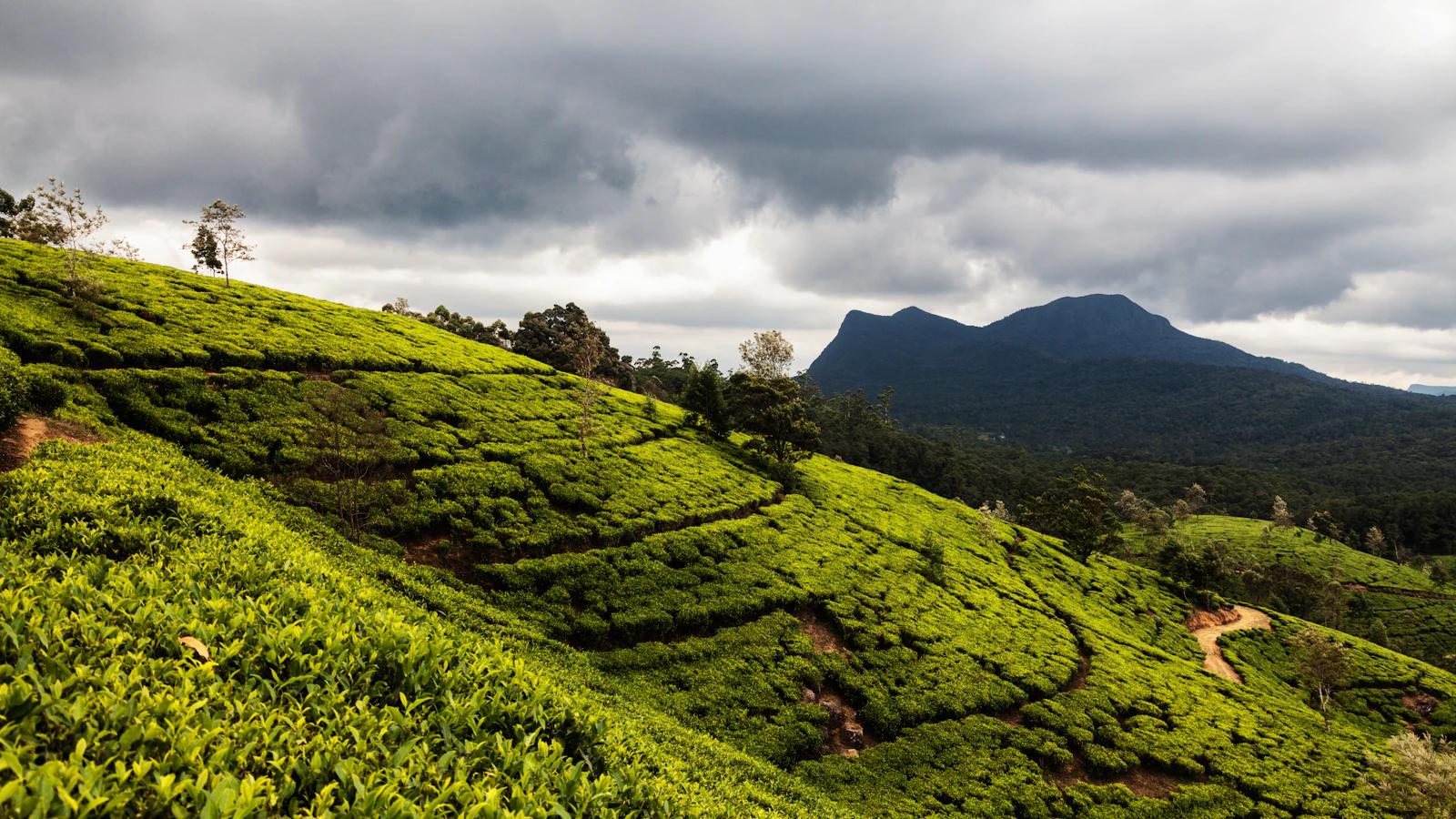
Today Nuwara Eliya remains one of Sri Lanka's most rewarding detours, an ideal pause on the classic route between Kandy and Ella. Come here for the tea estates rolling endlessly across every hillside, for waterfalls that tumble through dark jungle, for the colonial hotels that still serve afternoon tea with quiet ceremony, and for the kind of cool highland morning that makes you want to linger over a second cup.
---
Getting There: The Scenic Train from Kandy
The most memorable approach to Nuwara Eliya is by rail, and rightly so — this stretch of track is frequently listed among the world's great train journeys. Board the Udarata Menike or Podi Menike at Kandy station and settle in for roughly five hours of steadily climbing drama: rubber plantations give way to paddy terraces, then to pine forests and finally to the endless green geometry of tea estates stitched across the hillsides. The train coils through tunnels and over bridges, and passengers habitually lean from the open doors to feel the cooling air. Book an Observation Saloon seat in advance if you can — seats in the rear observation car are worth every rupee for the panoramic views as the train curves upward.
You alight at Nanu Oya station, a few kilometres outside town. Three-wheelers and taxis wait outside and the ride up to Nuwara Eliya takes around fifteen to twenty minutes, climbing through tea country all the way to the door of your guesthouse. Coming by road from Kandy takes about three hours via the A5; both routes are scenic, but only the train gives you that slow, rhythmic, almost theatrical reveal of the highlands.
---
Little England: Colonial Heritage in the Heart of the Hills
Walking through Nuwara Eliya's town centre is a mild and genuinely charming form of time travel. The Hill Club, founded in 1876, still stands on its trimmed lawns in serious Victorian stone, its dining room panelled in dark wood and hung with mounted hunting trophies, its dress code politely but firmly enforced at dinner. Non-members can visit for a meal or afternoon tea and absorb the atmosphere of an era that has otherwise largely evaporated from Asia.
The Grand Hotel — a former governor's residence and one of the most photographed buildings in the town — sprawls in pale colonial grandeur just up the road, its flower-bordered driveway leading to verandas and high-ceilinged rooms that have hosted guests for well over a century. Even if you are not staying there, it is worth walking in for high tea and a wander through the gardens. The red-brick post office near the town centre is another colonial relic worth a glance; its cheerfully old-fashioned facade has appeared on so many travel photographs that it has become an unofficial symbol of Nuwara Eliya's peculiar anachronistic charm. And then there is the Nuwara Eliya Race Course, the oldest in Sri Lanka, which comes spectacularly alive during April's racing season — a week of pageantry, fashion and festivity that fills every hotel in town.
---
Tea Estates: Pedro and Mackwoods Labookellie
No visit to Nuwara Eliya is complete without stepping inside a working tea factory, and the two most accessible estates sit on opposite sides of the town, each with its own character.
Pedro Tea Estate, owned by Dilmah and perched on the hills a few kilometres east of town, is one of the oldest estates in the region. Tours run through the full production process: visitors move through rooms fragrant with withering leaves, past the rolling machines that bruise and curl the leaf to release its oils, through the drying chambers where hot air tumbles the oxidised leaf to a uniform black, and finally into the grading room where wire meshes separate the grades by particle size. At the end, a simple tasting session lets you compare a bright, golden OP (Orange Pekoe) against a darker, stronger BOP — both grown within sight of the factory windows. The elevation here produces teas with a delicate, slightly floral character that is distinctly different from the warmer lowland estates.
Mackwoods Labookellie, about eleven kilometres north of town on the Kandy road, is the more visitor-friendly of the two and is ideally positioned for travellers arriving from Kandy — you can stop here before you even reach Nuwara Eliya. The tasting room overlooks a sweeping amphitheatre of tea terraces, and tea is served free of charge with a small piece of local cake. The factory tour is brisk and informative, and the estate shop stocks everything from first-flush teas to tea-infused chocolates. Even fifteen minutes here, with a warm cup in hand and that view spreading out below the veranda railing, earns its place in the memory.
---
Gregory Lake and Victoria Park
Gregory Lake is the social heart of Nuwara Eliya's afternoons. The reservoir — created in 1873 and named after a former governor — sits in a natural bowl of hills just south of the town centre, its grey-blue surface catching whatever light the clouds permit. Walk the perimeter path at a relaxed pace, rent a pedal boat or join a speed boat ride if the mood is festive, or simply find a bench and let the mountain air do its work. On weekends and public holidays local families arrive with snacks and children and kites, lending the lakeside a gentle carnival atmosphere that is entirely Sri Lankan despite the colonial-era surroundings. Food vendors line the main entrance road selling corn, isso vadai (shrimp fritters) and fresh fruit; for something warmer, the small restaurants nearby do reliable kottu and rice-and-curry.
Victoria Park, a few minutes' walk from the main town, is a quieter pleasure. Laid out in the colonial era and still immaculately kept, it is an ideal place to spend an hour on a cool morning before the day's plans begin. The park's resident birds — particularly the Indian blue robin, Kashmir flycatcher and dull-blue flycatcher that arrive as winter visitors — attract birdwatchers from across the island. In April and August the rose garden blooms with colour, and the lawns and hedged pathways are peaceful enough that even a short walk through them feels restorative.
---
Horton Plains and World's End
About thirty kilometres from Nuwara Eliya lies one of the island's most dramatic natural spectacles: Horton Plains National Park. The plains themselves are a treeless, rolling montane grassland at around 2,100 metres — wide and wind-swept and unlike anywhere else in Sri Lanka — but the main draw is World's End, a sheer escarpment that drops nearly 870 metres in a single vertiginous cliff face. On clear days the view plunges from your feet all the way to the southern coastal lowlands; on misty days the clouds simply swallow the void. The best advice is to arrive early — by 6:30 or 7:00 am — before the mist rolls in from the south, which it does most days by mid-morning. The circular walking trail from the park entrance to World's End and back via Baker's Falls (a lovely curtain of water framed by dense forest) covers about nine kilometres and takes two to three hours at a comfortable pace. Entry fees apply and are collected at the park gate.
---
Waterfalls and the Seetha Amman Temple
Lover's Leap waterfall spills dramatically off a cliff face on the Pedro Estate, a roughly fifteen-minute drive from town. The fall drops around 30 metres in a single white rush, framed on both sides by tea bushes and forest, and is most impressive during and just after the monsoon months when the volume is at its peak. The path to the viewing area is easy and takes only a few minutes on foot from the roadside parking. Local guides at the estate entrance can point you toward the best angle for photographs.
Closer to town, the Seetha Amman Temple sits in a river valley surrounded by green hills and carries with it one of Sri Lanka's most intriguing mythological associations. According to the Ramayana epic, this valley — Seetha Eliya — is the site where the demon king Ravana held the princess Sita captive while Rama marshalled his forces. The small, colourful Hindu temple that marks the spot receives a steady stream of pilgrims, particularly from South India, and the surrounding landscape — rocky outcrops, low forest and open meadow — is atmospheric regardless of your familiarity with the legend. It is a natural add-on to any morning outing toward the waterfalls.
---
Practical Tips: Weather, Clothing and Food
Nuwara Eliya's altitude makes it genuinely cold by Sri Lankan standards. Average daytime temperatures hover between 16°C and 20°C, and nights can drop to around 8°C or lower between December and February. Pack at least one fleece or light jacket, a waterproof outer layer and a pair of trousers — travellers who arrive from the coast in flip-flops and shorts are invariably the ones shivering on the veranda by sunset.
The driest and clearest months are December through March, making this the most reliable period for Horton Plains views. April is festive thanks to the racing season and Sinhalese and Tamil New Year celebrations, with lively crowds and buzzing restaurants. The monsoon months bring heavy mist and rain but also full waterfalls and dramatically moody scenery.
For food, the town's small restaurants serve excellent string hoppers (steamed rice-flour noodle nests) with lentil curry and coconut sambol at breakfast — warming, light and deeply satisfying at altitude. For dessert, seek out wattalappam, a rich coconut-milk and jaggery custard that appears on most Sri Lankan menus and is particularly welcome on a cold evening. The Grand Hotel's high tea service, which includes finger sandwiches, scones, and several varieties of Ceylon tea, is a moderate indulgence worth factoring into one day's plan.
---
Suggested 2-Night Itinerary
Day 1 — Arrive and acclimatise: Take the morning train from Kandy, stopping at Labookellie for tea. Check in and walk Gregory Lake in the late afternoon. Dinner in town.
Day 2 — Horton Plains: Early start (6:30 am departure) to World's End before the mist arrives. Return by mid-morning, then visit Pedro Tea Estate for a factory tour. Afternoon in Victoria Park. Evening stroll along the colonial town centre.
Day 3 — Waterfalls and onward: Morning visit to Lover's Leap and the Seetha Amman Temple. Depart by afternoon toward Ella via the A5 mountain road, or catch the train south from Nanu Oya.
---
Final Thoughts
Nuwara Eliya rewards the traveller who arrives without rushing. This is a place where the journey itself — the curving train line, the terraced hillsides, the fog that rolls in without warning and then retreats to reveal an improbably green landscape — is as much a part of the experience as any single sight. Stop for tea at an estate veranda. Walk the lake path in the early morning before the town wakes up. Stand at World's End and look south across half an island. Let the cool air slow you down in the best possible way. Nuwara Eliya is not a quick checkbox on the itinerary; it is the kind of place that quietly insists on being remembered.
Want to explore more?
Download our comprehensive E-Travel Guidebook for Ella.