Kandy to Ella Train Journey: One of Sri Lanka's Most Beautiful Experiences
By Stay Lanka Travels
Everything you need to know about the famous Kandy to Ella train ride through Sri Lanka's tea country. Scenery, tips, food, and why the journey is part of the adventure.
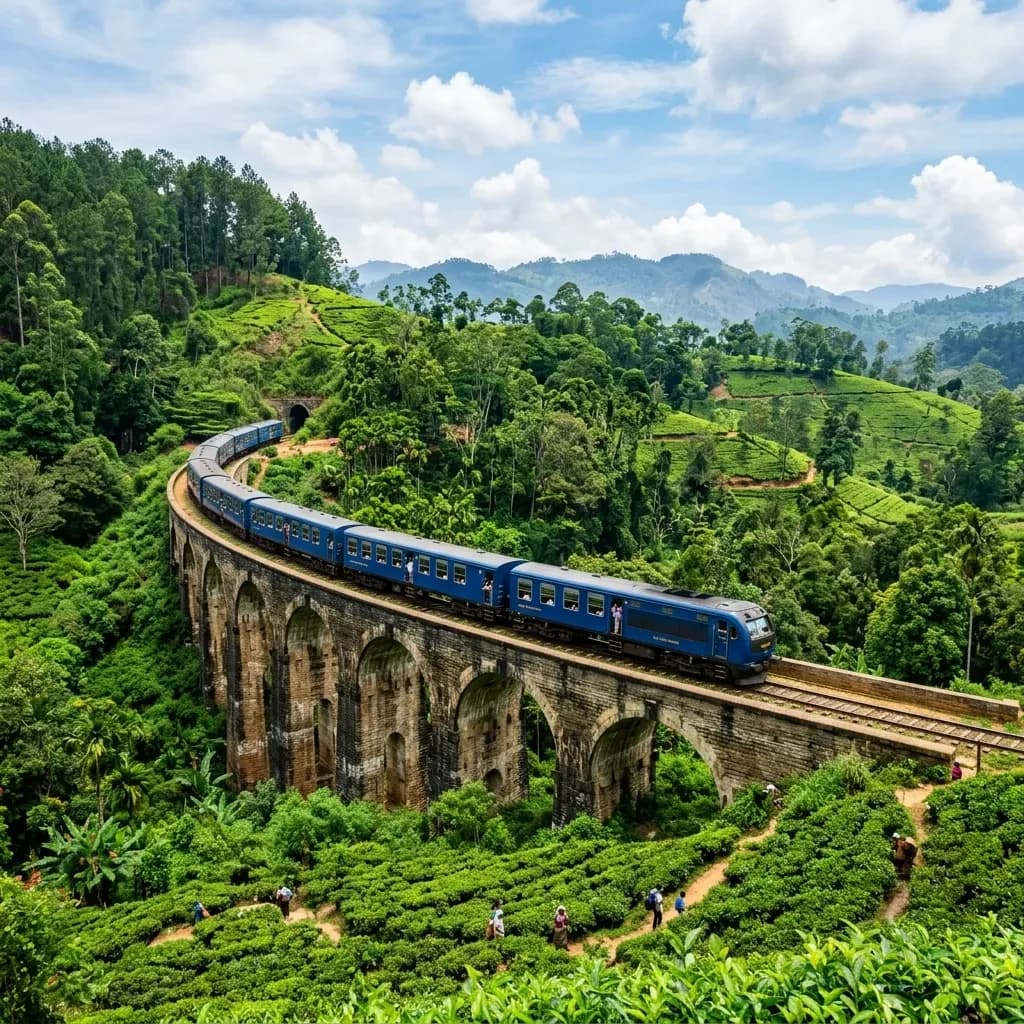
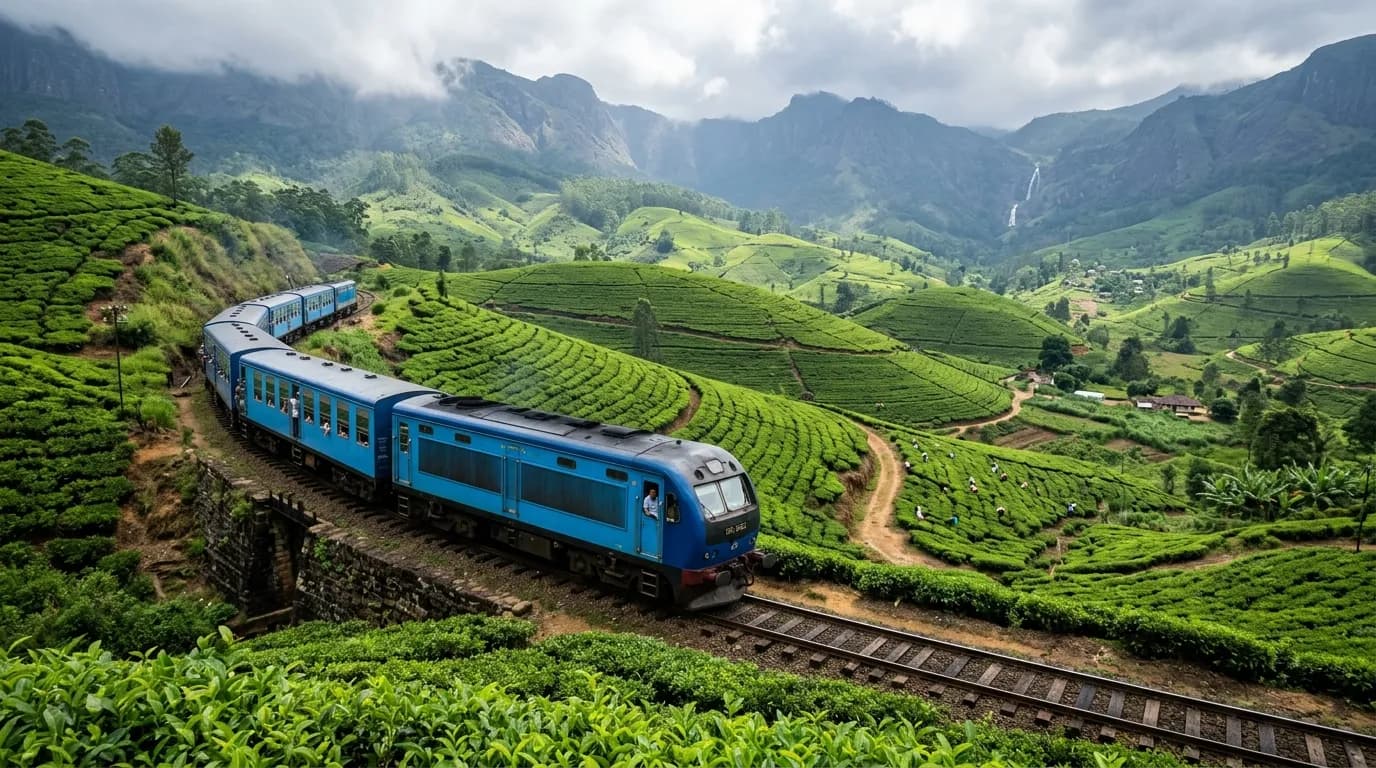
The heavy brass bell clangs three times across Kandy Railway Station. Diesel exhaust rises into the morning mountain air. Blue steel carriages groan against the rails as the train lurches forward.
You are embarking on one of the great railway journeys of the world. Over the next seven hours, the train covers 156 kilometres of vintage mountain track. It climbs from 500 metres in the Mahaweli river basin to nearly 1,900 metres above sea level.
Taking the train is considerably slower than hiring a private taxi. A car covers the distance in four hours.
Yet nobody rides this train for transit speed. You ride it to watch Sri Lanka's geography transform outside open carriage doorways.
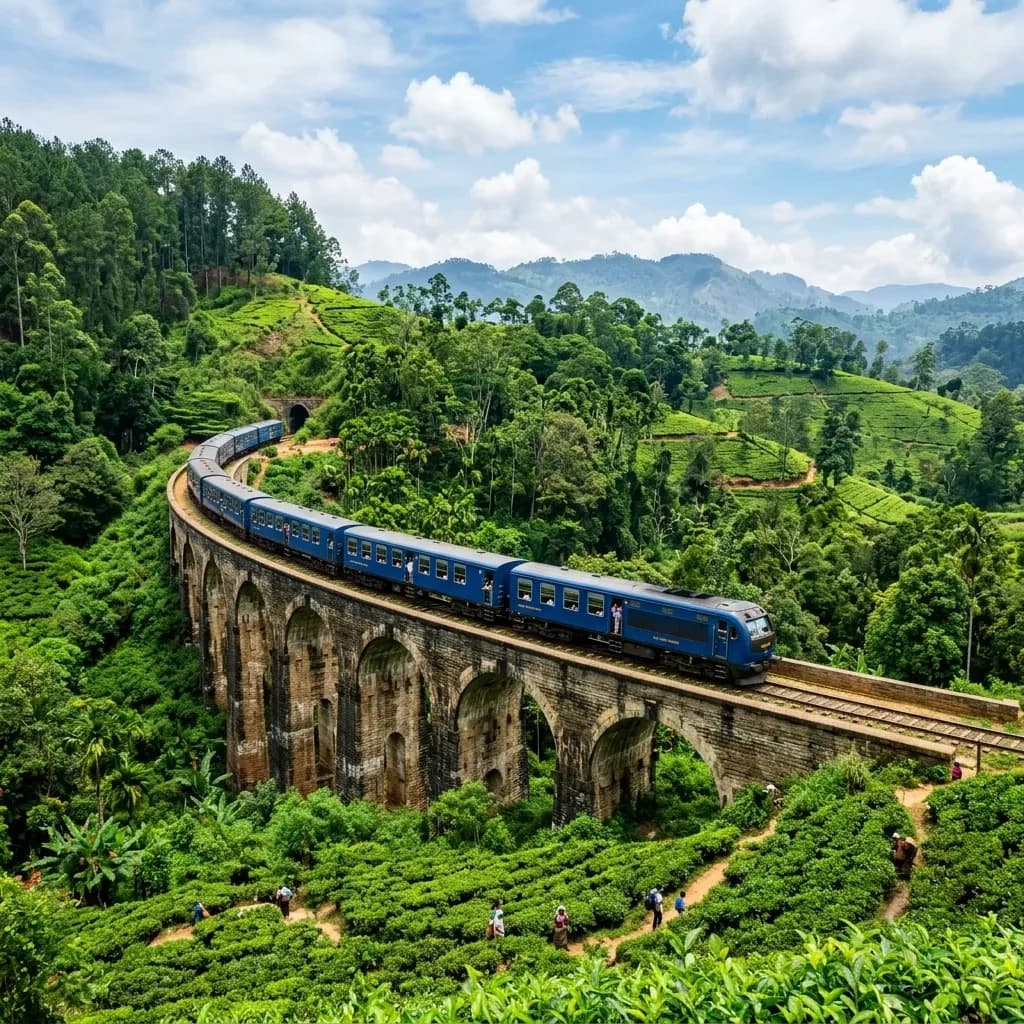
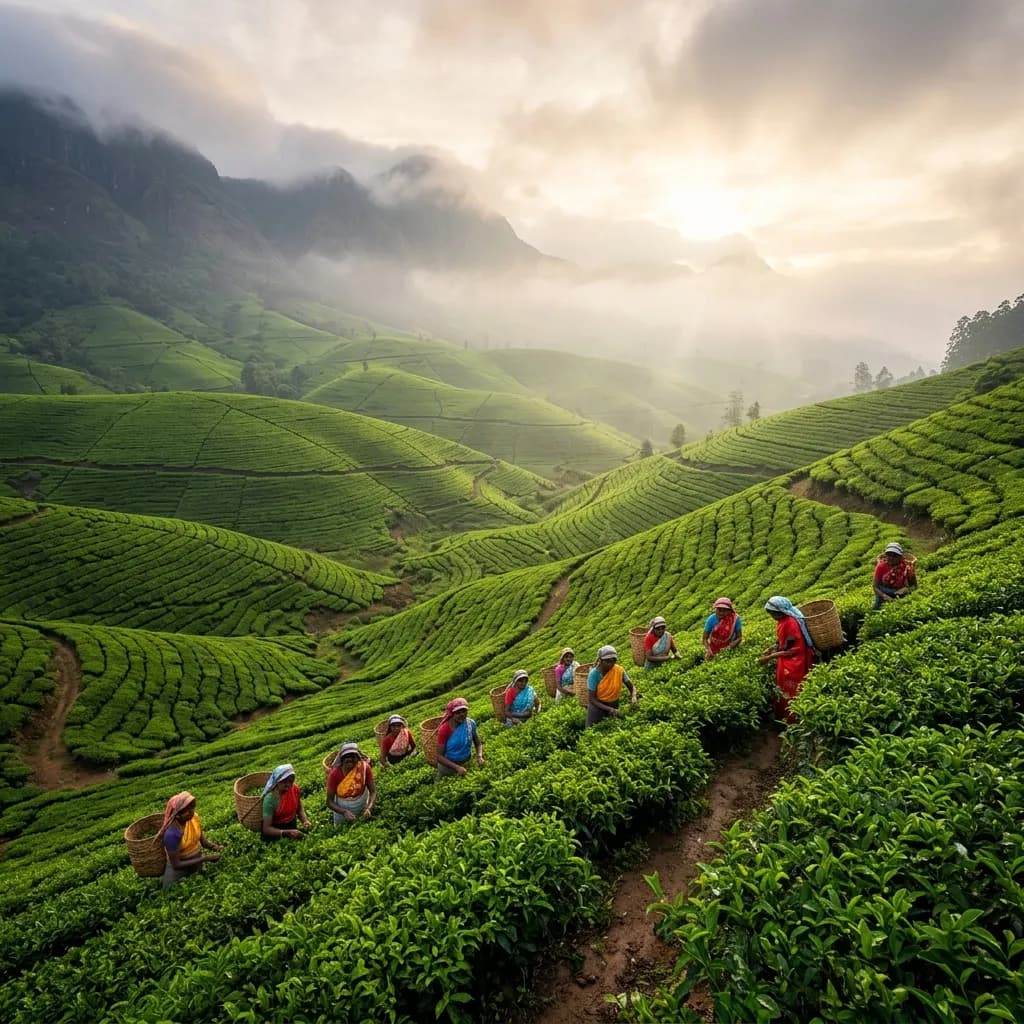
Thick palm groves give way to pine forests. Steaming tropical humidity dissolves into crisp mountain breezes. Endless terraces of emerald tea bushes wrap around high granite cliffs.
Here is your complete field guide to booking tickets, choosing the best side to sit, and navigating the iconic rail journey from Kandy to Ella.
Route Breakdown: Three Distinct Mountain Stages
The railway journey unfolds across three distinct geographic stages, each with its own character and topography.
Stage 1: Kandy to Hatton (500m to 1,200m)
The initial two hours ease you into the central highlands. Leaving Kandy, the tracks trace the rushing Mahaweli Ganga through mahogany groves and spice gardens.
As the train climbs toward Nawalapitiya, the gradient steepens sharply. Giant bamboo gives way to the first terraced tea estates. Waterfalls tumble down vertical rock walls beside the tracks. By the time you reach Hatton, you have entered the wet-zone tea capital of the island.
Stage 2: Hatton to Nanu Oya and Pattipola (1,200m to 1,898m)
This central section delivers the most dramatic high-altitude scenery. The train winds through the Dimbula tea valley, contouring along sheer mountain slopes.
Passengers gaze across deep gorges toward St. Clair's Falls and Devon Falls. The air turns cold and pine-scented.
At Nanu Oya Station, passengers heading to colonial Nuwara Eliya disembark. Beyond Nanu Oya, the engine works hardest, climbing toward Pattipola Station, the highest railway point on the island.
Stage 3: The Uva Descent: Haputale to Ella (1,800m to 1,041m)
After clearing the central summit, the train skirts the razor-thin ridge of Idalgashinna. The tracks cling to a narrow ledge with jaw-dropping drop-offs on both sides.
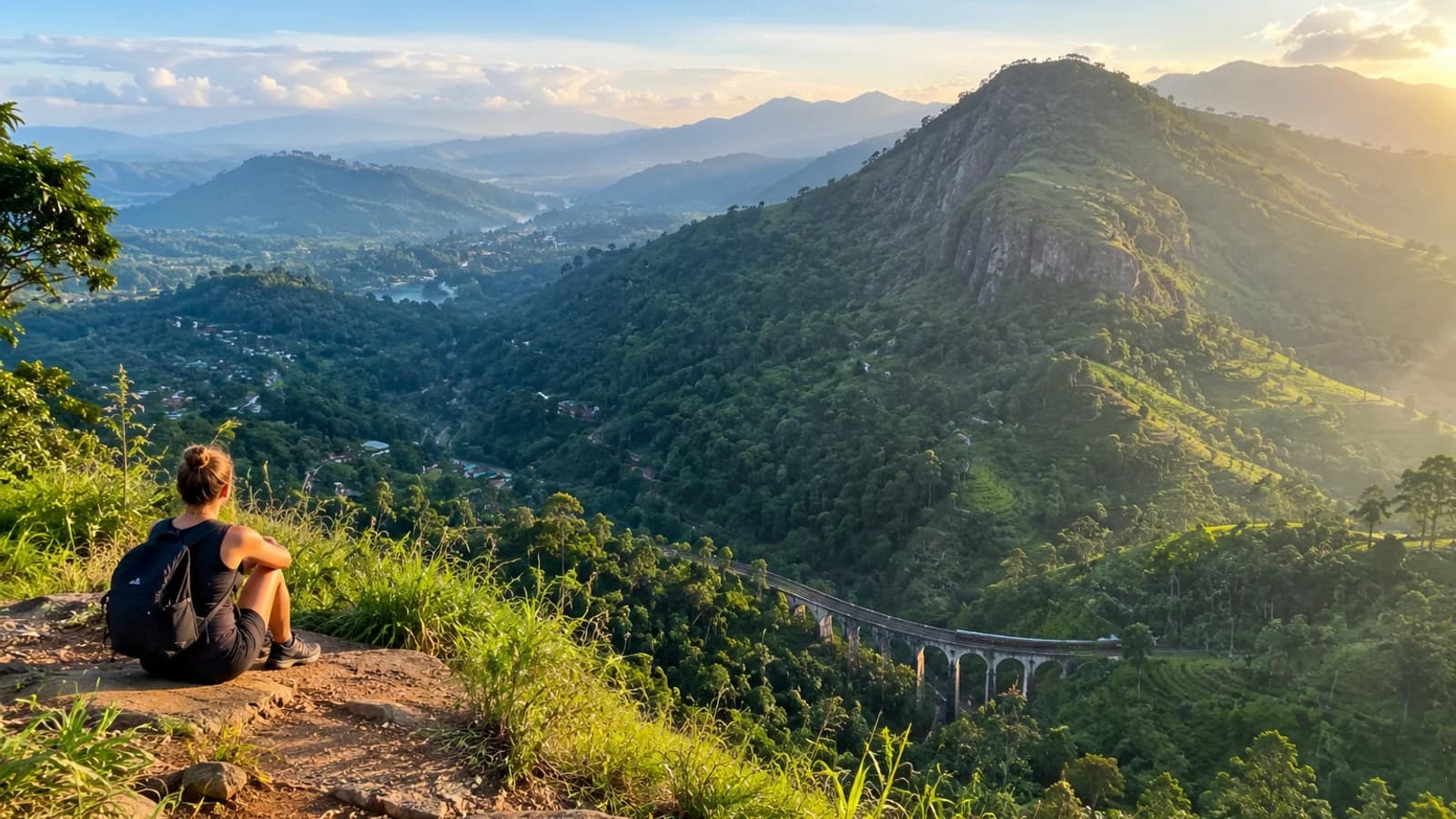
The landscape opens into the sweeping, sun-drenched dry-zone plains of Uva province. Finally, the train curves through mountain tunnels into the green amphitheatre of Ella.
Boarding Logistics: Kandy vs. Peradeniya Junction
Many first-time travellers get confused by train departures. The Main Line runs between Colombo Fort and Badulla.
Kandy sits on a small spur line branching off the Main Line. Because Kandy is a dead-end terminus, trains entering Kandy must switch locomotives or reverse direction to continue eastward.
Several daily express trains bypass Kandy Station entirely. Instead, they halt only at Peradeniya Junction, located six kilometres southwest of Kandy city centre.
Check your ticket carefully. If your train departs from Peradeniya Junction, take a short ten-minute tuk-tuk ride from town to board there. Boarding at Peradeniya also gives you a better chance to claim luggage space before crowds board at Kandy.
The 30-Day Ticket Scramble: Reserved vs. Unreserved
Securing a seat on the blue train requires careful planning:
Reserved Tickets (Book 30 Days Ahead)
Sri Lanka Railways releases reserved seating exactly thirty days in advance at 10:00 AM local time. During peak tourist seasons, reserved tickets on popular morning trains sell out within minutes.
Book online through the official Sri Lanka Railways ticketing portal or through a registered local agency.
- First Class: Air-conditioned with sealed windows and plush reclining seats. While comfortable, sealed glass ruins your view and eliminates the open-air breeze. We do not recommend First Class.
- Second and Third Class Reserved: The gold standard for travelers. You get an assigned, guaranteed seat, ceiling fans, and large windows that open fully for photos.
The Unreserved Walk-Up Adventure
If reserved tickets are sold out, do not despair. Sri Lanka Railways sells unreserved Second and Third Class tickets on the day of travel.
These tickets cannot sell out. Station counters begin selling them roughly one hour before departure for a few hundred rupees.
The catch is simple: an unreserved ticket does not guarantee a seat. You may have to stand in crowded aisles for the first hour. Arrive at the platform forty-five minutes early. Position yourself where the carriage doors stop, and board swiftly to claim an empty seat.
Which Side to Sit On: The Panoramic Switch
The views change dramatically depending on which side of the carriage you sit. To maximize your panoramic photos, follow the classic two-part rule:
- From Kandy to Nanu Oya: Sit on the RIGHT side of the train. The tracks hug the mountain cliffs, opening expansive views across the Kotmale river valley, terraced tea hills, and distant waterfalls.
- From Nanu Oya to Ella: Sit on the LEFT side of the train. After climbing through the summit plateau, the tracks run along the southern cliff escarpment. The left windows offer spectacular panoramas across Ella Gap and the distant southern plains.
If you have reserved seats on the "wrong" side, simply wander to the open carriage vestibules during the finest scenic stretches.
The Geographical Climax: Pattipola and Tunnel 18
The true geographical highlight of the route occurs between Nanu Oya and Haputale. Here, the train pulls into Pattipola Station, sitting proudly at 1,898 metres (6,227 feet) above sea level.
Just past Pattipola, the train plunges into Summit Level Tunnel, officially known as Tunnel Number 18. This dark stone passage cuts directly through the central mountain spine.
Exiting Tunnel 18 produces an astonishing meteorological shift. You enter the tunnel wrapped in cold, damp western monsoon clouds. You emerge moments later into brilliant blue skies and the warm, dry sunlight of the Uva basin. This natural weather divide is one of Sri Lanka's most remarkable geographical phenomena.
Street Food on Rails: Station Platform Flavors
One of the greatest joys of Sri Lankan train travel is the onboard street food. At every major mountain station, mobile food vendors board the carriages carrying wicker baskets and metal trays.
Vendors shout their offerings through the aisles, selling freshly prepared highland snacks:
- Isso Vadai: Crispy, deep-fried spiced lentil patties topped with whole crunchy prawns and fried curry leaves.
- Dhal Vadai: Savory, golden lentil cakes packed with green chilies, ginger, and onion.
- Salted Peanuts: Hot roasted peanuts seasoned with chili powder, served in paper cones rolled from recycled school notebooks.
- Fresh Cut Fruit: Slices of pineapple, papaya, and sour mango dusted with chili flakes and sea salt.
Flag down the "Chai" vendor when he walks past. He carries a massive stainless-steel thermos and paper cups. He pours steaming Ceylon milk tea spiced with fresh cardamom and crushed ginger. A hot cup of sweet ginger tea while rolling through misty tea hills costs under fifty rupees and tastes unforgettable.
Doorway Etiquette and Safety Realities
You have undoubtedly seen photos of travelers leaning gracefully out of open train doorways on social media. While riding in open doorways is an authentic Sri Lankan rail tradition, you must practice common sense:
- Maintain Three Points of Contact: Always keep a firm grip on the steel handrails with both hands. Sudden track dips and jolts can easily knock you off balance.
- Watch for Obstacles: Mountain tracks cut closely through narrow rock faces and signal posts. Tree branches brush against carriages unexpectedly. Never lean your head or body excessively outside the train frame.
- Share the Space: The open doorway is shared space. If you have spent fifteen minutes snapping photos, step aside and let fellow passengers enjoy the breeze.
- Never Ride on Couplings: Do not sit on the dangerous metal couplings between carriages. Remain securely on the wooden floor inside the doorway threshold.
Arriving in Ella: The Highland Reward
After seven hours of continuous climbing and contouring, the jagged silhouette of Ella Rock appears through the forward windows. The train glides across the forested mountain rim and pulls quietly into Ella Railway Station.
Step onto the flower-bordered stone platform and breathe in the crisp highland evening air. The slow rhythm of the iron road has prepared your senses for Ella's laid-back pace.
You have not merely arrived at your destination. You have traversed the beating heart of Sri Lanka's central highlands along one of the greatest railways ever built.
Want to explore more?
Download our comprehensive E-Travel Guidebook for Ella.